I used to think cancer couldn’t spread between individuals.
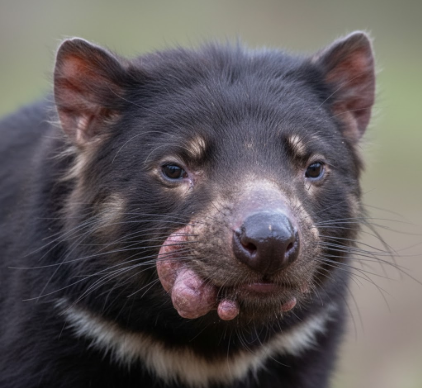
Then I learned about Tasmanian devils and their faces started falling apart—literally—and the whole thing turned evolutionary biology into a horror movie. Devil Facial Tumor Disease, or DFTD, is one of only a handful of transmissible cancers on Earth, and it’s been decimating populations of these marsupial carnivores since it was first documented in 1996. The tumors grow around the mouth and face, making it impossible for devils to eat, and they die of starvation within months. By 2008, devil numbers had plummeted by roughly 60 percent across Tasmania, and in some regions the decline hit 90 percent. The disease spreads when devils bite each other during feeding or mating—turns out their social behavior became their undoing. What makes DFTD particularly terrifying is that the cancer cells themselves are the infectious agent, not a virus or bacteria causing cancer.
Wait—maybe I should explain that better. Most cancers die with their host, but DFTD is different. The tumor cells act like parasites, jumping from devil to devil and continuing to grow in new hosts. Genetic studies revealed something shocking: all DFTD tumors are clones derived from a single devil that developed cancer decades ago, possibly in the 1980s. That original devil is long dead, but its cancer lives on, an immortal cell line that’s essentialy a separate organism now.
Here’s the thing—Tasmanian devils are uniquely vulnerable because of their lack of genetic diversity.
The species went through a population bottleneck thousands of years ago when rising sea levels isolated Tasmania from mainland Australia. That genetic uniformity means their immune systems are remarkably similar, so when DFTD jumps to a new host, the recipient’s body doesn’t recognize the foreign cells as invaders. It’s like the cancer found a loophole in their biology. Normally, your immune system would destroy cells from another individual—that’s why organ transplants require immunosuppressants—but devils essentially recieve these tumor cells as if they belong there. The MHC genes, which help the immune system distinguish self from non-self, show very little variation in devil populations. I guess it makes sense that this created the perfect conditions for a contagious cancer to thrive.
Honestly, the situation got even more complicated in 2014.
Researchers discovered a second transmissible cancer, DFT2, with a completely independent origin—meaning this nightmare scenario happened twice. The existence of two separate contagious cancers in the same species is unprecedented in wildlife disease. Scientists have been racing to understand why devils are so susceptible and whether other factors contribute to transmission rates. Environmental stressors, diet quality, and devil behavior all play roles, but the underlying genetic homogeneity remains the critical factor. Some populations in northwestern Tasmania showed lower infection rates, and genetic analysis revealed these groups had slightly more diversity—particularly in immune-related genes. That discovery sparked hope for conservation strategies.
Turns out evolution might be working faster than anyone expected.
By 2016, researchers began documenting devils with genetic variants that seemed to provide resistance to DFTD. These animals either didn’t develop tumors or showed slower tumor growth. Conservation programs started focusing on maintaining genetic diversity and establishing insurance populations in disease-free areas. Some devils were relocated to mainland Australia, and captive breeding programs prioritized individuals with potentially protective genetic traits. The species isn’t out of danger—wild populations remain suppressed—but there’s cautious optimism that devils might adapt fast enough to coexist with the disease. The whole saga illustrates how quickly evolution can respond to extreme selective pressure, even in mammals with relatively long generation times. It’s also a stark reminder that cancer, under the right circumstances, can definately break all the rules we thought governed it.