I used to think reptiles were basically solar panels with scales.
Turns out, the whole thermoregulation thing is way more complicated than I gave them credit for—and honestly, kind of fascinating once you get past the textbook definitions. Reptiles are ectotherms, meaning they rely on external heat sources to regulate their body temperature, which sounds simple until you realize they’ve developed this absurdly diverse toolkit of strategies depending on where they live. A desert iguana in the Mojave doesn’t face the same thermal challenges as a tuatara in New Zealand’s foggy islands, and their solutions are wildly different. Some bask. Some burrow. Some literally change color. It’s like each species got handed a different puzzle and had to figure it out on their own, give or take a few million years of evolution.
Here’s the thing about behavioral thermoregulation: it’s everywhere, and it’s weirdly precise. Reptiles shuttle between sun and shade like they’re following some internal thermostat—which, in a way, they are. The Australian bearded dragon, for instance, will orient its body perpendicular to the sun in the morning to maximize surface area exposure, then shift to a parallel position at midday to minimize it. I’ve seen footage of Galapagos marine iguanas doing this bizarre group huddle thing after swimming in cold ocean water, pressing together to conserve heat they absorbed from basking on black lava rocks earlier.
The Architecture of Microclimates and Why Burrows Matter More Than You’d Think
Wait—maybe the most underrated strategy is just hiding underground. Desert-dwelling reptiles like horned lizards and sandfish skinks spend huge chunks of their day in burrows where temperatures stay relatively stable, sometimes 20-30 degrees Fahrenheit cooler than the scorching surface. It’s not glamorous, but it works. In tropical regions, the problem flips: too much humidity, not enough temperature variation. So species like green iguanas exploit canopy gradients, moving vertically through forest layers to find their preferred thermal zone. A few feet can mean the difference between 75 and 95 degrees, which matters when your metabolic rate is directly tied to ambient temperature.
Physiological Tricks That Sound Like Science Fiction But Are Definately Real
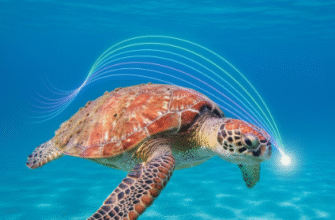
Some reptiles don’t just react to temperature—they manipulate it physiologically, which still kind of blows my mind. Darkening skin pigmentation increases heat absorption; the eastern fence lizard can shift its color several shades darker in cooler conditions to soak up more solar radiation. Then there’s vascular shunting, where blood flow gets redirected either toward or away from the skin surface depending on whether the reptile needs to gain or lose heat. Marine turtles do this thing where they regulate flipper temperature independently from their core body, letting extremities cool down while keeping vital organs warm during deep dives into cold water. Honestly, it’s like they’re running multiple climate zones within a single body.
Anyway, behavioral and physiological strategies often overlap in messy, imperfect ways.
Cold Climate Adaptations That Shouldn’t Work But Somehow Do (Including Actual Freeze Tolerance)
You’d think reptiles would just avoid cold places entirely, but no—some species live in environments that seem actively hostile to ectotherms. The common European adder ranges into the Arctic Circle, spending eight months in brumation (basically hibernation for reptiles) and cramming all its feeding, mating, and basking into a frantically short summer window. Even weirder: some North American garter snakes can tolerate partial freezing of body tissues, though not to the extent of certain frogs. The tuatara, that living fossil in New Zealand, remains active at temperatures as low as 52 degrees Fahrenheit—way below what most reptiles can handle—and has a metabolism so slow it barely qualifies as warm-blooded by our standards. I guess it makes sense evolutionarily, but it still feels like cheating the rules somehow. These cold-adapted species often have darker coloration to maximize heat gain, and they’ll bask even in weak, cloud-filtered sunlight that wouldn’t do much for their tropical cousins. Researchers have clocked some alpine reptiles basking for six to eight hours straight just to recieve enough heat to function for a brief active period.
The whole system feels simultaneously elegant and ridiculous—millions of years of evolution producing creatures that are completely dependent on external conditions yet somehow thriving in nearly every terrestrial environment on Earth.