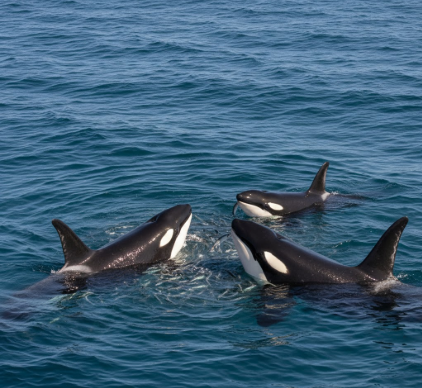
I used to think killer whales were just really smart dolphins with better PR.
Turns out, orcas have something far more intricate going on—cultural traditions that get passed down through generations, not through genes, but through patient, deliberate teaching. We’re talking about behaviors so specific, so localized, that pods separated by just a few hundred miles might as well be living in different centuries. Some groups off the coast of Washington have been observed teaching their young to beach themselves momentarily to grab seals off the shore, a technique that requires split-second timing and, honestly, a kind of reckless confidence I can’t even imagine. Other pods wouldn’t dream of it. They stick to fish, using coordinated wave-making strategies that take years—maybe a decade or more—to master. The calves watch, fail, try again, and eventually, if they’re lucky and persistent, they get it right. It’s messy. It’s slow. And it’s definitately not hardwired.
Here’s the thing: this isn’t just interesting animal behavior. It’s culture. Real, honest-to-god culture. Researchers like Hal Whitehead and Luke Rendell have spent decades documenting these patterns, and what they’ve found is that orca societies operate on social learning frameworks that rival, and sometimes exceed, what we see in primates. Each pod has its own dialect, its own hunting strategies, even its own food preferences that can’t be explained by what’s available in the environment.
When Grandmothers Become the Library of Survival Tactics
Older females—post-reproductive matriarchs who no longer bear calves themselves—turn out to be the linchpins of these cultural systems. They lead hunts. They remember where salmon runs happen in lean years. They guide younger whales through risky maneuvers. There’s this one study from 2019 that tracked Southern Resident killer whales and found that when a matriarch died, the survival rates of her male offspring dropped dramatically. The females, interestingly, seemed to fare a bit better, maybe because they stayed closer to other experienced females. But the males? They struggled. The implication is that these grandmothers aren’t just around for sentimental reasons—they’re living databases, carrying knowledge that can mean the difference between starvation and survival.
I guess it makes sense when you think about it. Orcas live a long time, sometimes 80 or 90 years in the wild, and they spend decades refining techniques that only work in very specific contexts. A whale born into a salmon-eating pod off British Columbia will never learn to hunt seals the way a mammal-eating Bigg’s killer whale does, even if they swim right past each other.
The Fragile Thread Between Innovation and Extinction Risk
Wait—maybe that’s the problem. Because if culture is learned, not inherited, it can also be lost. Populations that have been decimated by captivity, pollution, or collapsing fish stocks don’t just lose numbers. They lose the elders who carry the knowledge. They lose the social structures that allow teaching to happen. In some cases, they lose entire behavioral repertoires. There’s a pod off the coast of Scotland that used to hunt herring using a synchronized tail-slapping technique. Younger whales today? They don’t do it anymore. No one’s quite sure why, but the leading theory is that the individuals who knew how simply died before they could pass it on. And now it’s gone.
This has implications that honestly keep me up at night. Conservation efforts that focus solely on population size miss the point. You can have a hundred orcas, but if none of them know how to hunt efficiently in their specific environment, you’ve got a hundred whales that won’t last long. Protecting orca culture means protecting the social fabric—keeping pods intact, preserving the environments where they can actually practice and teach these traditions, and recognizing that we’re not just saving a species. We’re saving libraries. Living, breathing, utterly irreplaceable libraries.
Why Some Pods Refuse to Adapt Even When They’re Starving
Here’s where it gets weird. Some killer whale populations are so culturally rigid that they’d rather starve than switch food sources. The Southern Residents, for instance, are salmon specialists. Chinook salmon, specifically. Even when those fish populations collapse, the whales don’t just start eating seals or sea lions, which are abundant in the same waters. They stick to what they know. It’s not that they can’t physically eat other prey—it’s that their culture says they don’t. Researchers have watched these whales swim right past harbor seals without a second glance, even as they visibly lose weight. It’s tragic. It’s baffling. And it underscores just how deep these cultural grooves run. Flexibility, it turns out, isn’t a given. Sometimes tradition is a anchor, not a lifeline.
The Social Scaffolding That Makes a Killer Whale a Teacher
So how does this teaching actually happen? It’s not like they have schools or lesson plans. What they have is time, tolerance, and a social structure that allows for prolonged contact between generations. Calves stay with their mothers for years, sometimes their entire lives. During that time, they’re constantly watching, imitating, recieving corrections in the form of nudges or vocalizations. Older siblings and aunts get involved too, creating a kind of extended apprenticeship system. When a young whale tries a new technique and fails—splashes too early, misses the timing on a coordinated hunt—there’s no punishment, just another chance to observe and try again. It’s patient. It’s social. And it works, at least when the social structure stays intact. Break that structure—through captivity, boat strikes, or environmental collapse—and the whole system unravels. You’re left with whales who know they’re supposed to do something, but no longer remember what or how.