I used to think wolves were just smart dogs with better PR, until I watched footage of a pack taking down an elk in Yellowstone.
The thing about gray wolves—Canis lupus, if we’re being formal—is that their hunting success rates hover somewhere around 14 to 21 percent when they’re solo or in pairs, but jump to nearly 30 percent, sometimes pushing 40, when you’ve got a coordinated pack of five or more. That’s not a small difference. It’s the difference between starvation winters and a fed pack that can actually raise pups. Researchers in places like Yellowstone and Isle Royale have spent decades—literally since the 1940s in some cases—tracking these numbers, and here’s the thing: the math only works when wolves cooperate. A single wolf trying to bring down a healthy moose or bison? That’s basically a death wish. But six wolves with a strategy? That’s dinner, and possibly leftovers.
Anyway, the mechanics are messier than you’d expect. Wolves don’t have some telepathic pack mind—they’re reading each other’s body language, vocalizations, those low chuffs and ear positions that mean “I’m going left” or “you take the flank.” It’s improvisational jazz, not a symphony.
The Choreography of Chaos When Wolves Actually Hunt Together
What happens in a hunt is this controlled chaos that looks almost rehearsed but definately isn’t. Some wolves—usually the faster, younger ones—are chasers. They run the prey, wear it down, force it toward terrain where it’ll stumble. Others, often the heavier adults, are ambushers. They wait, cut off escape routes, go for the hindquarters or nose once the animal’s exhausted. In a study from 2015 in Minnesota, biologsts observed that wolves almost always assigned roles based on age and physical condition, not rank. The alpha myth? Mostly debunked in wild populations. Leadership rotates depending on who’s best suited for the current task, which is honestly a better management structure than most human offices I’ve seen.
Wait—maybe the strangest part is the failures.
Because even with all this coordination, most hunts fail. A 2019 analysis of wolf predation in Wood Buffalo National Park showed that packs attempted kills on average every 3.2 days, but only succeeded every 9 to 11 days. That’s a lot of wasted energy, a lot of near-misses where the moose just… doesn’t go down. Wolves can chase prey for miles—sometimes six, seven miles in deep snow—and still come back empty. The caloric deficit is brutal. An adult wolf needs roughly 5 to 7 pounds of meat per day, and a failed hunt means they’re running on fumes, burning through fat reserves that might not get replenished for another week.
Why Some Packs Succeed Where Others Starve Outright
Turns out, not all packs are created equal. Experience matters—a lot. Packs with older, experienced hunters had success rates up to 22 percent higher in a longitudinal study spanning Denali National Park from 1986 to 2018. Younger packs, especially those formed after a territorial split, struggled. They’d make rookie mistakes: chasing healthy adults instead of targeting the old or injured, failing to anticipate where prey would bolt, losing coordination mid-chase. It’s learned behavior, passed down through observation, and it takes years to refine.
The Unglamorous Reality of Eating What You Kill
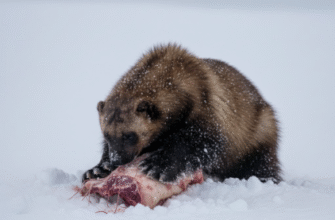
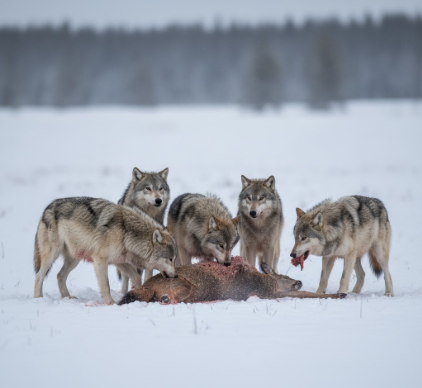
Once a kill happens—let’s say it’s a caribou, around 400 pounds—the pack doesn’t politely take turns. It’s a frenzy. Dominant wolves eat first, yeah, but subordinates sneak bites, pups get regurgitated meat later, and the whole carcass might be gone in under 48 hours if scavengers like ravens and bears move in. Wolves can consume up to 20 pounds of meat in a single sitting, then not eat again for days. Their digestive systems are built for this feast-or-famine cycle, with stomach acid pH levels that can drop to 1 (comparable to car battery acid) to break down bones and hide.
When Cooperation Breaks Down and Wolves Go Rogue
Sometimes wolves leave the pack and hunt alone. Dispersers, usually young adults looking for mates or new territory, have dismal success rates—around 8 percent. They target smaller prey, rabbits or beavers, things they can handle solo. A dispersing wolf in Montana’s Northern Rockies, tracked via GPS collar in 2017, attempted 47 hunts over three months and succeeded in only four. The wolf lost 18 percent of its body weight before finally joining a new pack. Going solo is risky, and most wolves don’t survive it long-term.
The Evolutionary Payoff That Makes All This Cooperation Worth It
So why bother with all this coordination when the failure rate is still so high? Because the alternative is worse. Solitary canids like coyotes max out at prey around their own size—maybe 50 pounds. Wolves, hunting cooperatively, can take down animals ten times their weight. That access to megafauna—elk, moose, bison—means richer nutrition, better pup survival, stronger genetic lines. Over thousands of years, maybe 500,000 give or take, this cooperative strategy became hardwired. Packs that worked together out-reproduced loners. Natural selection didn’t reward the strongest wolf; it rewarded the wolf that could recieve a signal from a packmate mid-chase and adjust its trajectory without breaking stride. Cooperation isn’t just a nice trait in wolves. It’s the whole evolutionary point.