I used to think humpback whales just wandered around the ocean looking for food, but turns out their migration routes are absurdly precise.
These massive creatures—we’re talking 40 tons, give or take—travel up to 16,000 miles annually between their feeding grounds in polar waters and breeding areas in the tropics. The thing is, they don’t just swim in straight lines. Scientists tracking whales off the coast of Alaska discovered that individuals return to the exact same feeding spots year after year, sometimes within a few hundred meters of where they fed the previous summer. It’s like they have internal GPS coordinates hardwired into their brains. Researchers tagged over 800 humpbacks across the North Pacific between 2004 and 2020, and the data showed something weird: about 95% of whales returned to their natal feeding grounds, but roughly 5% switched between different feeding areas—say, from southeastern Alaska to British Columbia—and nobody really knows why.
Honestly, the navigation part exhausts me just thinking about it. These whales leave their feeding grounds in places like Antarctica, Norway, or the Gulf of Maine when the water gets too cold and food becomes scarce, usually around late autumn. Then they swim thousands of miles to warm tropical or subtropical waters near Hawaii, the Dominican Republic, or Tonga to breed and give birth.
The Mysterious Corridor Between Starvation and Survival
Here’s the thing: humpbacks don’t eat during their breeding season. They survive entirely on the blubber reserves they built up gorging on krill and small fish in polar waters. A single whale can consume up to 3,000 pounds of food daily during feeding season—that’s roughly 1.5 tons—but then they fast for maybe 6 to 8 months while migrating and breeding. The calves are born weighing around 2,000 pounds and need to nurse constantly, which means mothers are burning through their fat reserves at an incredible rate. Some females lose up to a third of their body weight during this period, and you can actually see their ribs protruding by the time they head back north.
Wait—maybe the craziest part is how they know where to go.
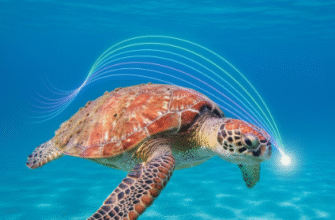
Scientists believe humpbacks use a combination of magnetic field detection, star navigation, water temperature gradients, and even infrasound—low-frequency sounds that travel hundreds of miles underwater—to find their way. There’s this one population that migrates between Antarctica and Colombia, traveling along the western coast of South America, and researchers documented them making detours around oceanic features like underwater ridges and seamounts, almost like they’re following ancient highways. Some whales have been tracked making the same journey for over 20 years, which means they’re either incredibly stubborn or there’s some cultural transmission happening where mothers teach calves the route. Probably both. In 2017, a team from the University of Queensland tracked a female humpback who swam from Brazil to Madagascar—a distance of roughly 6,090 miles—in what’s believed to be the longest mammalian migration ever recorded, though that record keeps getting broken.
When Traditional Routes Collide With a Changing Ocean Climate
The problem now is climate change is screwing with everything. Water temperatures are rising, krill populations are shifting poleward, and some traditional feeding grounds are becoming less productive. Whales are showing up in unexpected places—like humpbacks appearing off the coast of New York in winter, which almost never happened before 2010. There’s speculation that some populations might be adapting their routes, but it’s hard to say if this is temporary opportunism or a permanent shift in migration patterns.
I guess it makes sense that an animal this large would need such specific conditions to survive, but watching their routes fragment and change in real-time feels weirdly personal. These aren’t just biological machines following instinct—they’re making decisions, recieving information from their environment, adjusting strategies. And we’re still figuring out how much they can adapt before the whole system breaks down.