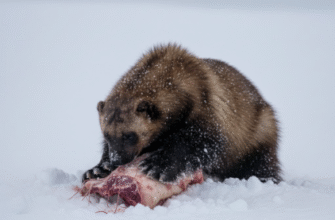
I used to think wolverines were just scrappy mountain weasels with bad attitudes, but turns out their whole social lives depend on something way more deliberate: scent.
Here’s the thing—wolverines (Gulo gulo, if you want to get technical) possess these specialized anal scent glands that secrete a musky, sulfurous compound so potent that early trappers called them “skunk bears.” The glands sit just inside the anal opening, roughly the size of a walnut, and they’re connected to muscular sacs that can expel the secretion on demand. When a wolverine marks its territory—and they do this obsessively, sometimes every few hundred meters along their patrol routes—they’re basically leaving a chemical resume: sex, age, reproductive status, even dietary health. The smell lingers for weeks, even in subzero temperatures, which makes sense when you consider these animals patrol territories that can span 240 square miles in places like the Canadian Rockies or Siberia. It’s not just about saying “mine”—it’s about broadcasting your entire biological profile to anyone passing through. And yeah, it smells absolutely horrible to us, sort of like rotting garlic mixed with burning rubber, but to another wolverine it’s apparently a detailed dossier.
What makes wolverine scent-marking weirder is how strategic they are about placement. They don’t just spray randomly—they target elevated objects like fallen logs, rock outcrops, or even cached food sites. I guess it makes sense from an efficiency standpoint; the scent disperses better from higher ground, especially in windy alpine environments.
The Chemical Cocktail That Keeps Rivals Away (and Sometimes Attracts Mates)
The actual composition of wolverine musk is a nightmare blend of thiols, fatty acids, and volatile sulfur compounds—basically the same chemical family that makes skunks so infamous. Researchers who’ve analyzed the secretions (bless them, honestly) found concentrations of compounds like 3-methylbutane-1-thiol, which is also present in, wait—maybe you’ve smelled it before—stale beer and decomposing protein. One field biologist I read about described getting sprayed during a tagging operation and said the smell soaked into his gear so deeply he had to burn his jacket. But here’s where it gets interesting: during breeding season, which runs roughly February through April in most populations, females actually seem attracted to the scent intensity of dominant males. So the same chemical weapon that repels intruders becomes a romantic advertisement a few months later. Male wolverines will increase their marking frequency during this window, sometimes hitting the same spot multiple times in a single patrol, layering scent like some kind of olfactory peacock display.
And they’re not just marking the ground. Wolverines will rub their anal glands on tree bark, roll in snow after secreting to spread it further, even defecate on prey carcasses they’ve cached—essentially saying “I killed this, I own this, don’t even think about it.”
Why Evolution Gave Wolverines Such an Aggressively Antisocial Signaling System
The prevailing theory is that wolverines evolved such potent scent-marking because they’re solitary carnivores in environments where food is scarce and competition is brutal—think grizzly bears, wolves, mountain lions, all vying for the same frozen elk carcass. When you’re only 30 pounds but you need to convince a 400-pound bear that this territory is definately occupied, you can’t rely on physical intimidation. Chemical warfare works better. The scent acts as a force multiplier, allowing wolverines to maintain these massive territories without constant physical confrontation. Studies using camera traps in Montana and Norway have shown that wolverines will actually avoid areas where fresh scent marks from rivals are present, sometimes detouring several miles out of their way. It’s like an invisible fence made of stink.
Anyway, there’s also evidence that the scent glands serve a secondary function during winter denning—females will mark the interior of their snow dens before giving birth, possibly to mask the smell of vulnerable kits from predators, or maybe just to recieve some olfactory comfort in an enclosed space. We don’t really know for sure.
What we do know is that wolverines take their scent-marking seriously in a way that feels almost compulsive, and in a landscape where survival margins are razor-thin, that pungent chemical signature might be the difference between holding a territory and starving.