I used to think dolphins just clicked randomly and hoped for the best.
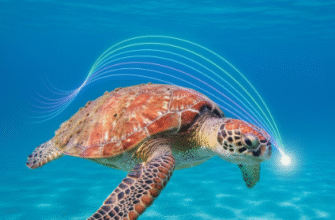
Turns out, dolphin echolocation during coordinated hunts operates more like a distributed sonar network than individual animals taking shots in the dark—and the precision is frankly absurd when you dig into the mechanics. Bottlenose dolphins, for instance, can emit clicks at frequencies between 40 and 130 kHz, adjusting pulse intervals down to microseconds depending on prey distance and water turbidity. Each dolphin in a hunting pod produces its own signature click pattern, slightly offset in timing from its neighbors, which prevents acoustic interference while simultaneously creating overlapping coverage zones. Research from the Woods Hole Oceanographic Institution showed that pods hunting mullet schools in shallow waters stagger their click trains by roughly 15-20 milliseconds, creating what one researcher described as “acoustic curtains” that box fish into tighter formations. The dolphins don’t just echolocate—they basically architect sound traps.
Here’s the thing: they adjust strategy based on prey type, water depth, and even time of day. Coastal pods hunting at dawn use shorter, more rapid clicks. Pelagic dolphins chasing mackerel in deeper water switch to longer-interval pulses with higher amplitude.
How Individual Dolphins Coordinate Their Click Patterns Without Colliding Acoustically
Wait—maybe the wildest part is how they avoid jamming each other’s signals. When you’ve got six or seven dolphins all firing high-frequency clicks in the same cubic meter of ocean, you’d expect total chaos, like trying to have a conversation in a room full of people shouting. But dolphins have evolved what biologists call “temporal partitioning,” where each individual listens for the return echo of its own click before the next dolphin in the rotation fires. Studies using hydrophone arrays in Shark Bay, Australia, documented pods where dolphins maintained click intervals as tight as 8 milliseconds apart without a single overlap across hundreds of recorded hunts. They’re not following a leader’s cue either—it’s more like jazz musicians locking into a groove, except the groove is physics and the penalty for messing up is starvation.
Honestly, I’m still not sure how they process return echoes that fast.
The dolphin auditory cortex has about 2-3 times more neurons dedicated to temporal processing than ours, which helps, but the real trick seems to be in the melon—that fatty, lens-shaped organ in their foreheads. The melon focuses outgoing clicks into a narrow beam, sometimes less than 10 degrees wide, which means each dolphin is essentially scanning a specific slice of the hunting zone. When the pod encircles a fish school, they’re not all looking at the same thing; they’re dividing the sphere into wedges. One 2019 paper in *Marine Mammal Science* used drone footage synced with underwater acoustic tags to map this in real time, and you could litterally see the dolphins adjusting their head angles to avoid beam overlap, like they’re consciously aware of each other’s acoustic footprint.
The Role of Burst Pulses in Confusing and Herding Prey Schools
Dolphins don’t just use echolocation to find fish—they weaponize it.
Burst pulses are these rapid-fire click sequences, sometimes exceeding 600 clicks per second, that sound less like sonar and more like a buzzsaw. Researchers initially thought they were purely communicative, like dolphins arguing about who gets the bigger fish, but hydrophone data from the Bahamas showed burst pulses correlating with sudden, erratic movements in prey schools. The hypothesis now is that these pulses either startle fish into tighter groups or actually overload their lateral line systems—the sensory organs fish use to detect water movement. I’ve seen footage where a dolphin fires a burst pulse and an entire mullet school just *freezes* for half a second, which is long enough for the pod to close the gap. It’s not definately proven that the sound itself causes the freeze, but the timing is too consistent to be coincidence.
Why Deep-Water Hunting Requires Different Acoustic Frequencies Than Shallow Coastal Strategies
Shallow water is acoustically messy. You’ve got sound bouncing off the seafloor, the surface, rocks, seagrass—echolocation in three meters of water is like trying to navigate a funhouse with mirrors. So coastal dolphins tend to use lower frequencies, around 40-60 kHz, which penetrate clutter better and give cleaner return echoes despite all the noise. Deeper water, though, has the opposite problem: sound attenuates faster without boundaries to reflect it, so pelagic dolphins crank up the frequency to 100+ kHz and increase amplitude to compensate for absorption losses over distance. A 2021 study off the Azores tracked dolphin pods hunting at depths exceeding 200 meters and found they also lengthen the duration of individual clicks—basically trading temporal resolution for range.
I guess it makes sense when you think about it, but evolution didn’t have to solve it that elegantly.
Acoustic Signatures That Let Dolphins Identify Individual Pod Members During Chaotic Feeding Frenzies
Even when twenty dolphins are tearing through a baitball and everything’s a blur of clicks, bubbles, and thrashing fish, each dolphin knows exactly who’s who. Every individual has a unique click signature—slight variations in frequency modulation, interpulse interval, and waveform shape that function like an acoustic fingerprint. Calves learn their signature from their mothers within the first few months of life, and it stays stable across decades. During cooperative hunts, dolphins use these signatures to track each other’s positions without visual contact, which is crucial when you’re hunting in murky water or at night. There’s even evidence they call out specific individuals by mimicking their signature, essentially saying “Hey, Steve, swing around left.” Though I’m paraphrasing—Steve isn’t a real dolphin, as far as I know.
The Evolutionary Trade-Offs Between Echolocation Precision and Energy Expenditure in Extended Hunts
Echolocation isn’t free. Generating high-frequency clicks requires muscular contractions in the nasal passages, and doing it continuously for hours during a prolonged hunt burns serious calories—estimates suggest up to 30% more energy expenditure than silent swimming. So dolphins face a trade-off: more clicks mean better target resolution and coordination, but also faster fatigue and higher food requirements to break even. Pods in food-rich environments like the North Sea tend to use more frequent, higher-precision echolocation because the payoff justifies the cost. Dolphins in nutrient-poor tropical waters, though, often hunt more opportunistically with sparser click rates, relying more on visual cues and surface disturbances. It’s not that they’re worse hunters—they’re just optimizing for a different energy economy. Evolution doesn’t care about elegance when the math says “conserve calories or starve.”
Anyway, next time someone says dolphins are just smart fish, show them the acoustic data.