I used to think lionesses just sort of… ran at things.
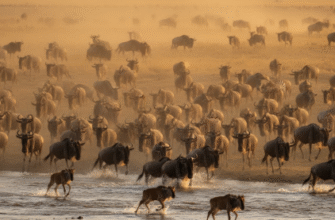
Turns out, the hunting strategies of female lions are so methodically choreographed that watching a pride stalk a herd of zebras feels less like witnessing nature and more like observing a SWAT team that’s been working together for years. Each lioness knows her role—some are “wings” who flank wide to cut off escape routes, others are “centers” who drive the prey toward waiting ambushers, and there’s usually one or two who hang back as reserves in case the whole thing goes sideways. Which it does, roughly 70-80% of the time, because prey animals didn’t survive this long by being stupid. The coordination required is exhausting to watch, honestly, because you can see them adjusting in real-time: if a wildebeest breaks left instead of right, the entire formation shifts like water around a rock. They communicate through body language so subtle that researchers spent decades trying to figure out if they were actually coordinating or just getting lucky. They weren’t getting lucky. Craig Packer’s long-term studies in the Serengeti—started back in the 1970s, I think—showed that prides with more females had disproportionately higher success rates, not because of sheer numbers but because they could execute more complex strategies.
Here’s the thing: not all lionesses are equal hunters, and the pride knows it.
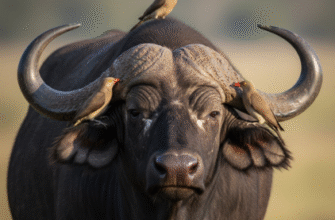
Older females, the ones with graying muzzles and scars crisscrossing their shoulders, often take less physically demanding roles—they’re the strategists, positioning themselves where their experience matters more than their speed. Younger lionesses, maybe four or five years old, do the heavy lifting: the sprinting, the leaping, the brutal work of bringing down an animal that weighs twice what they do. But here’s where it gets weirdly unfair—when the kill is made, the biggest, most dominant females eat first, regardless of who actually made the kill. I guess it makes sense from an evolutionary standpoint (stronger females = better protection for cubs), but watching a lioness who just spent fifteen minutes wrestling a buffalo get shoved aside by an older female who barely participated feels… I don’t know, frustrating? Nature doesn’t care about fairness, obviously.
The Silent Language of Coordinated Ambush and Spatial Awareness
What fascinates me most is how they hunt without making a sound. Lions don’t have the vocal repertoire of, say, wolves—they can’t howl instructions across a savanna. Instead, they rely on what researchers call “referential signaling,” which is a fancy way of saying they look where they want you to go. A lioness will stare intently at a specific spot in the grass, and her pridemates will recieve the message: that’s where we’re setting up. They also use something called “stotting suppression”—they target prey that isn’t jumping around alertly, because those individuals are either young, old, or sick, and therefore easier to isolate. The spatial distribution during a hunt is almost mathematical: studies using GPS collars showed that lionesses maintain specific distances from each other (usually 20-50 meters) to maximize coverage without spooking the prey too early. When one lioness breaks into a run, the others don’t immediately follow—they wait, watching where the prey turns, then accelerate from their positions to intercept. It’s like watching a very slow, very deadly game of chess where all the pieces are already in place before the game even starts.
Anyway, the success rate thing is interesting because it’s so low.
Even with all this coordination, most hunts fail. A 2018 study tracking prides in Botswana found success rates hovering around 25-30% for large prey like buffalo or giraffe, though it jumped to nearly 50% for smaller targets like impala. Part of the problem is that prey animals have evolved counter-strategies—zebras form tight clusters with foals in the center, wildebeest scatter in unpredictable directions, and buffalo will actually charge back at the lions if they sense weakness. Lionesses adapt by hunting at night when visibility favors them, or during the chaos of river crossings when prey are already disoriented. They also seem to remember which strategies worked on which species: the approach for hunting warthogs (quick, direct chase) is totally different from the approach for eland (long, patient stalk followed by a coordinated rush). There’s evidence they teach these techniques to younger females through observation—cubs as young as eight months will follow hunts without participating, just watching, which suggests learned behavior rather than pure instinct.
Division of Labor Based on Individual Strengths and Personality Differences
Here’s something I only learned recently: lionesses have definately distinct personalities that affect how they hunt. Some are bold and aggressive, always volunteering for the risky center positions where they’re most likely to get kicked or gored. Others are cautious, preferring the flanking roles where they can contribute without exposing themselves to as much danger. A long-term study in Tanzania actually identified individual lions and tracked their hunting behaviors over years—same lioness, same role, almost every single time. The pride wasn’t assigning roles randomly; they were optimizing based on who was good at what. The researchers called it “task specialization,” and it mirrors what we see in human teams: you don’t put your slowest runner in the position that requires the most speed. What’s weird is that this specialization seems to be socially learned rather than genetic—daughters often adopt the same hunting roles their mothers had, even when they might physically be better suited for something else. Wait—maybe that’s not weird at all. Maybe that’s just culture, lion culture, which is a sentence I never thought I’d write but here we are.