I used to think all sea turtles were basically the same underwater—graceful, ancient, doing their slow-motion thing in the shallows.
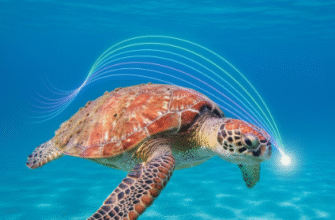
Turns out leatherbacks are the weirdos of the turtle world, diving down to depths that would crush most other sea turtles like empty soda cans. We’re talking 1,200 meters here, sometimes deeper, which is roughly four Empire State Buildings stacked on top of each other. Green turtles and loggerheads? They max out around 300 meters, maybe 400 if they’re feeling adventurous. The difference isn’t just impressive—it’s kind of absurd when you think about the physics involved. Leatherbacks have this whole different body plan that lets them handle the pressure, the cold, the darkness down there. Their shells aren’t even really shells in the traditional sense; they’re more like thick, leathery skin reinforced with thousands of tiny bone plates, which gives them flexibility that hard-shelled turtles just don’t have.
Here’s the thing: they’re chasing jellyfish into the abyss, and jellyfish don’t care about depth zones. Leatherbacks have evolved into these highly specialized jellyfish-eating machines, and their prey migrates vertically through the water column every day—rising at night, sinking during the day. So leatherbacks follow them down into what marine biologists call the mesopelagic zone, that twilight region where sunlight barely penetrates.
The Biological Pressure Suit That Makes Deep Diving Possible
Wait—maybe I should back up.
The real secret is in their physiology, which is honestly kind of bizarre. Leatherbacks can collapse their lungs completely during a dive, which sounds terrifying but actually prevents nitrogen from dissolving into their bloodstream (the thing that gives human divers the bends). Their heart rate drops from around 60 beats per minute at the surface to maybe 10 beats per minute at depth. They’ve got this massive oil gland that helps with buoyancy control, and their blood carries oxygen way more efficiently than other sea turtles—hemoglobin that just doesn’t quit. I guess it makes sense when you consider they’ve been perfecting this for roughly 100 million years, give or take a few million.
But there’s more to it than just not dying from pressure.
Thermoregulation in the Cold Dark Depths Where Nothing Else Goes
Leatherbacks are also the only reptiles that can maintain a body temperature significantly warmer than the surrounding water—a trait called gigantothermy. They’re massive (up to 900 kilograms), and that bulk combined with a thick layer of insulating fat lets them keep their core temperature around 25-26°C even when the water drops to 5°C. Other sea turtles would basically shut down in those conditions, their metabolisms grinding to a halt. Leatherbacks just keep swimming, keep diving, keep hunting. It’s like they’ve hacked the reptile operating system and installed mammal-like features without actually becoming mammals.
Anyway, I’ve seen footage of them diving, and it’s weirdly methodical—no panic, no hesitation.
The Evolutionary Trade-offs That Come With Extreme Depth Adaptation
There’s a cost to all this specialization, though. Leatherbacks are so committed to the deep-diving jellyfish lifestyle that they’re vulnerable in ways other turtles aren’t. They frequently mistake plastic bags for jellyfish (a mistake that’s often fatal), and their nesting beaches are disappearing due to coastal development and climate change. Their eggs are more temperature-sensitive than other species’, which means warming sand temperatures are skewing sex ratios—too many females, not enough males. The very adaptations that make them incredible divers also make them inflexible when their environment shifts too quickly. Evolution optimized them for one thing, and now that thing is getting harder to do.
Why Depth Capability Doesn’t Guarantee Survival in Modern Oceans
Honestly, it’s kind of exhausting thinking about how precarious their situation is.
The ability to dive deeper than any other sea turtle should be an advantage, but it doesn’t protect them from longline fishing gear, from ingesting plastic, from losing nesting habitat. They can handle crushing pressure at 1,200 meters down, but they can’t handle us. Marine biologists have tracked individual leatherbacks making trans-oceanic migrations, diving thousands of times, traveling from Indonesia to California, from Trinidad to West Africa—these epic journeys that span entire ocean basins. And yet their population numbers keep declining in most regions. The Pacific leatherback population has crashed by more than 90% since the 1980s. You’d think an animal that’s survived for 100 million years, that can dive deeper than a nuclear submarine can go, would be invincible. But here we are, watching them disappear in real time, wondering if the next generation will ever see one outside a documentary.