I used to think whales just sort of wandered.
Then I spent three weeks on a research vessel off the coast of Baja California, watching gray whales navigate with what can only be described as intentionality—following coastlines like they were reading a map etched into the ocean floor. These animals travel roughly 10,000 to 12,000 miles roundtrip each year, one of the longest migrations of any mammal on Earth, and they do it with a precision that still baffles marine biologists. The Eastern North Pacific population, which numbers around 20,000 individuals, departs from the Bering and Chukchi Seas in late fall, hugging the North American coastline as they head toward the warm lagoons of Mexico. It’s not a straight shot—they detour, pause, sometimes backtrack—but the general route remains consistent across generations. What drives them isn’t entirely clear, though we know calving in protected lagoons and feeding in nutrient-rich Arctic waters play central roles. Here’s the thing: they don’t just swim south randomly. They follow bathymetric features, underwater ridges, and coastal contours with such consistency that scientists can predict their arrival times within days.
Wait—maybe I should back up. Gray whales aren’t the sleek, deep-diving types like blues or fins. They’re coastal specialists, bottom-feeders who scoop up sediment and filter out amphipods and other tiny crustaceans. This feeding strategy ties them to shallow continental shelves, which is why their migration route stays so close to shore. During the southbound journey, which peaks between December and February, they pass landmarks like Point Reyes in California, the Channel Islands, and eventually Scammon’s Lagoon and San Ignacio Lagoon in Baja. Mothers give birth in these lagoons, where the water is warm and predators are fewer.
The Northbound Return and the Puzzle of Navigation in Cetacean Biology
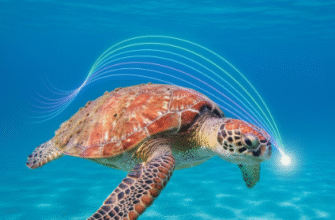
The return trip, starting in late February through May, is when things get messier. Newly born calves, barely two months old, make the journey north alongside their mothers—a feat that seems almost reckless given the distance and the orcas lurking along the route. Some whales take a more offshore path on the way back, possibly to avoid coastal traffic or to access different food sources. Honestly, we don’t know for sure. What we do know is that gray whales use multiple cues for navigation: magnetic field detection, sun positioning, maybe even echolocation off the seafloor. There’s evidence they can sense the Earth’s magnetic field through magnetite crystals in their tissues, though the exact mechanism remains speculative. They also seem to rely on social learning—calves following mothers, learning the route through observation rather than pure instinct.
Turns out, not all gray whales follow the main route.
A small group, maybe 200 individuals called the Pacific Coast Feeding Aggregation, stays along the coasts of Oregon, Washington, and British Columbia year-round, feeding instead of migrating all the way to the Arctic. This challenges the idea that migration is purely instinctual. If some whales can skip it, what’s really driving the others? Energetic payoff seems like the obvious answer—Arctic feeding grounds explode with amphipods during summer, offering a caloric jackpot that justifies the journey—but there’s probably more to it. Social bonds, historical memory passed through generations, maybe even cultural traditions we’re only beginning to understand. I’ve seen footage of whales returning to the exact same lagoon year after year, sometimes the same small cove, as if drawn by something deeper than food. It’s tempting to romanticize it, but the data backs up the pattern: gray whales have site fidelity that borders on the obsessive.
Human Impacts and the Shifting Pressures Along Ancient Corridors
Here’s where it gets uncomfortable. The migration route that gray whales have followed for thousands of years now intersects with shipping lanes, fishing zones, oil exploration sites, and coastal development. Ship strikes are a leading cause of death for gray whales along the West Coast, and entanglement in fishing gear is another persistent threat. Climate change is altering the Arctic ecosystem—ice melt is changing the timing and availability of prey species, which could disrupt the synchrony between whale arrival and peak food abundance. Some scientists worry that if the caloric reward diminishes, the migration itself could become unsustainable. There’s also noise pollution from shipping and sonar, which can interfere with the whales’ ability to navigate and communicate. We’re essentially making their journey harder without fully understanding the cumulative impacts.
The Western Pacific Population and What We Almost Lost Forever
I guess it’s worth mentioning the Western North Pacific gray whale population, which was hunted to near-extinction and now numbers fewer than 300 individuals. These whales migrate along the coasts of Russia, Korea, and Japan, following a route that’s less studied and more precarious. Conservationists have been working to protect their feeding grounds off Sakhalin Island, but industrial activity remains a threat. The contrast between the recovering Eastern population and the critically endangered Western population highlights how fragile these migration routes really are. Lose the habitat at either end—breeding lagoons or feeding grounds—and the entire system collapses. It’s not just about protecting whales in isolation; it’s about preserving the entire coastal corridor they depend on, which is definately easier said than done given the competing economic interests along these shores.
Anyway, watching a gray whale breach off the coast, knowing it’s traveled thousands of miles and will travel thousands more, does something to you. It recalibrates your sense of scale, of endurance, of what’s possible when a species is wired to move. They don’t have maps or GPS, just an inherited knowing that pulls them south and then north again, year after year, generation after generation, along coastlines that have shifted and changed but still, somehow, guide them home.