I used to think bees just sort of bumbled around until they found flowers by accident.
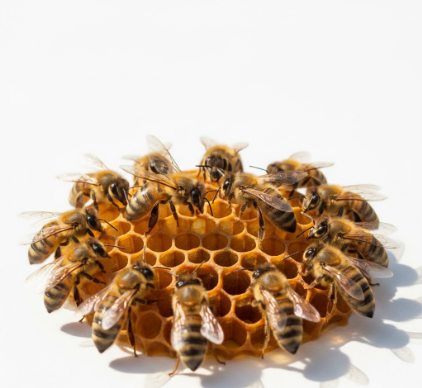
Turns out—and this genuinely surprised me when I first learned it, probably a decade ago now—honeybees have what can only be described as a language, a choreographed wiggle dance that conveys astonishingly precise information about food sources kilometers away. Karl von Frisch won a Nobel Prize in 1973 for decoding this, though plenty of scientists at the time thought he was, frankly, out of his mind. The idea that an insect with a brain the size of a poppy seed could communicate abstract concepts like distance and direction seemed preposterous. But here’s the thing: bees perform what’s called the waggle dance on the vertical comb inside dark hives, and other bees—sometimes hundreds of them—crowd around to recieve the message, then fly off in exactly the right direction to find the same patch of wildflowers the dancer just visited.
The mechanics are weird and specific. A returning forager bee walks in a figure-eight pattern, waggling her abdomen during the straight center portion. The angle of that waggle run, relative to straight up on the comb, corresponds to the angle between the sun, the hive, and the food source—so if she waggles 40 degrees to the right of vertical, the other bees know to fly 40 degrees to the right of the sun’s current position.
The Duration of the Waggle Reveals How Far to Fly
Distance gets encoded in time, which I guess makes sense but still feels almost absurdly elegant. The longer the waggle phase lasts, the farther away the food. Roughly one second of waggling means about a kilometer of flight, give or take, though this varies slightly by bee subspecies and even individual hive dialects. Yes, dialects—bees from different regions perform the dance with measurable differences, like accents. Italian honeybees waggle differently than German ones, and if you mix colonies, they initially misunderstand each other until they sort of negotiate a common language.
Wait—maybe the strangest part is that this all happens in total darkness.
The dancer can’t see the comb, the audience can’t see her, and yet they’re processing incredibly complex spatial information through vibration and touch. Follower bees press their antennae against the dancer’s body, feeling the direction and duration of her movements, sometimes even the wing beats that accompany the waggle. Scientists have used robotic bees—actual miniature robots that can waggle—to test whether the dance alone is sufficient, and yes, bees will follow the instructions from a correctly programmed robot and fly to locations they’ve never visited. The first time researchers got that to work, in the early 2000s, it felt like science fiction.
Why Bees Bother With Such Elaborate Communication Systems at All
Honestly, it’s an efficiency thing. A single hive can contain 50,000 bees, and they need to collectively exploit scattered, ephemeral flower patches before competitors—other hives, butterflies, beetles—drain the nectar. Random searching would waste enormous amounts of energy. The waggle dance lets successful foragers recruit hundreds of nestmates to high-quality sites within minutes. Some researchers estimate this communication system increases a colony’s foraging efficiency by something like 25%, which over a season translates to survival versus starvation.
But bees also argue with each other through dance, which I find weirdly relatable.
When Multiple Foragers Promote Different Food Sources Simultaneously Through Competing Dances
If one bee finds mediocre flowers nearby and another discovers amazing flowers farther away, they’ll both dance, and the audience has to decide which to follow. The bee advertising the better site dances more enthusiastically and for longer durations, literally out-competing the other dancer for attention. Over time—sometimes hours—the hive reaches a consensus, and everyone flies to the objectively better location. It’s democracy through interpretive dance, and it works astonishingly well. Researchers have even shown that scout bees evaluating potential new nest sites use the same decision-making process, dancing to advertise cavities in trees until the swarm agrees on the best option.
The Dance Language Breaks Down Under Modern Agricultural Landscapes With Fragmented Habitats
Here’s where things get a little depressing, I guess. The waggle dance evolved in environments where flowers were patchy but predictable—meadows, forests, stuff like that. Industrial monoculture farms present a different problem: massive fields of a single crop bloom all at once, then nothing for months. Bees can communicate the location of a soybean field just fine, but there’s no need for the nuance of the dance when the food source is a 500-acre rectangle visible from space. Some evidence suggests bees in agricultural areas dance less frequently, relying more on individual trial-and-error searching, which might make colonies more vulnerable to, say, sudden changes in forage availability or pesticide exposure definately complicating their survival. The language hasn’t disappeared, but its usefulness has dimmed, and that feels like a loss—not just for bees, but for the sheer improbable beauty of the thing itself.