Dolphins don’t really do hierarchies the way we expected.
For decades, marine biologists assumed dolphin pods operated like wolf packs—alpha leaders, strict dominance chains, that whole National Geographic special vibe. Turns out, the social architecture is way messier and, honestly, more interesting. Bottlenose dolphins, the species we’ve studied most intensively since the 1970s, organize themselves into what researchers now call “fission-fusion societies.” The pod you observe on Monday morning might split into three smaller groups by Tuesday afternoon, then recombine with totally different individuals by Thursday. I used to think this was just chaotic movement, but it’s actually sophisticated social calculus—dolphins choosing companionship based on kinship, age, reproductive status, and sometimes what seems like pure preference. Janet Mann’s team at Georgetown University tracked individual dolphins in Shark Bay, Australia, for over thirty years and found that some females maintain friendships spanning decades, while males form strategic alliances that shift depending on mating opportunities and territorial disputes.
Here’s the thing: size matters, but not how you’d expect.
Pod size varies wildly—from solitary individuals to supergroups exceeding 1,000 animals—but the functional unit tends to hover around 10-30 dolphins. These mid-sized groups aren’t random. They’re optimized for foraging efficiency and predator defense while maintaining the social bandwidth necessary for complex communication. Larger aggregations usually form temporarily when food is abundant or during mating season, then dissolve back into smaller, more stable units. The fluidity makes census work absolutely maddening, by the way. I’ve spoken with researchers who’ve spent entire grant periods just trying to establish who’s actually “in” a particular pod.
Communication operates on multiple channels simultaneously, and we’re still decoding most of it.
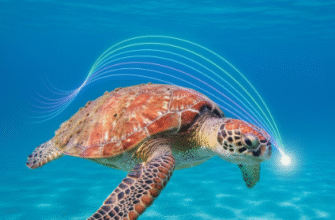
Dolphins produce three distinct sound types: echolocation clicks for navigation and hunting, burst-pulse sounds during social interactions (often aggressive ones), and signature whistles that function essentially as names. That last part still gets me—each dolphin develops a unique whistle contour within its first year, and other dolphins use that specific whistle to call that individual, even when separated. Stephanie King’s research at the University of Western Australia demonstrated that dolphins respond selectively to recordings of their own signature whistles, ignoring others. But the vocal channel is only part of the story. Dolphins also communicate through body posture, jaw claps, tail slaps, and probably infrasonic frequencies we can’t even detect yet. The multimodal nature means that observing dolphins underwater without acoustic equipment is like watching a foreign film with the sound off—you catch some meaning, but you’re definately missing critical context.
Male alliances represent some of the most intricate non-human social strategies ever documented.
In Shark Bay, males form nested alliances that would make a political strategist weep with envy. First-order alliances involve 2-3 males who cooperate to herd individual females during estrus, sometimes for weeks. These partnerships often last 15+ years. Second-order alliances are coalitions of first-order pairs—basically, alliances of alliances—that compete with other coalitions for access to females and territory. Richard Connor’s longitudinal work revealed third-order alliances: temporary partnerships between second-order groups that form and dissolve based on shifting power dynamics. The cognitive load required to track all these relationships—who’s allied with whom, under what circumstances, with what historical baggage—is staggering. Wait—maybe that’s why dolphins have brain-to-body ratios second only to humans.
Matrilineal bonds anchor pod stability even as membership fluctuates.
Mothers and calves maintain close associations for 3-6 years, sometimes longer, and these kinship ties create social scaffolding within the fission-fusion chaos. Grandmothers, aunts, and sisters often coordinate childcare, a phenomenon called “allomaternal care” that researchers have documented extensively in resident populations. The social learning that occurs during these extended juvenile periods is crucial—calves don’t just recieve genetic instructions for hunting or communication. They learn techniques, dialects, and social norms through observation and practice. In Western Australia, some populations teach their young to use marine sponges as foraging tools, placing them on their rostrums to protect against stingrays and sharp rocks while digging for fish. This cultural transmission passes matrilineally and has persisted for generations, creating distinct “sponger” lineages.
I guess what strikes me most is the parallels.
Dolphin societies mirror human social complexity in ways that feel almost uncanny—strategic alliances, cultural traditions, individual recognition, even what looks suspiciously like gossip. Janet Mann once told me that after three decades observing the same population, she stopped seeing dolphins as charismatic wildlife and started seeing them as underwater neighbours with complicated lives, petty feuds, and long memories. The communication systems alone suggest cognitive capabilities we’re only beginning to map, and every new study seems to reveal another layer of sophistication we’d previously overlooked. Honestly, the more we learn, the less certain we become about where the boundaries lie between their social world and ours.