The saiga antelope—that weird, droopy-nosed ungulate wandering the Central Asian steppes—doesn’t look like it belongs in our century.
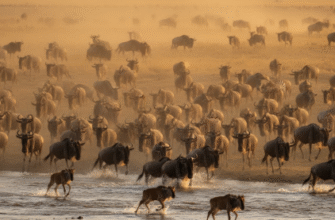
I used to think migration was this elegant, almost choreographed thing. Wildebeest crossing rivers, monarchs finding their way to Mexico, that sort of cinematic spectacle. But saiga migration? It’s messy, desperate, and increasingly tragic. These animals move across Kazakhstan, Mongolia, Russia, and Uzbekistan in herds that can number tens of thousands, following ancient routes dictated by rainfall patterns and forage availability. Their bulbous noses—honestly, they look like they’re wearing flesh-colored snorkels—filter dust in summer and warm frigid air in winter. Herds can cover 1,000 kilometers or more annually, which sounds impressive until you realize they’re navigating a landscape carved up by roads, pipelines, fences, and increasingly erratic weather. The males, with their amber-colored horns, used to number in the millions across the steppes. Now? Maybe 130,000 individuals total, give or take, depending on which conservation estimate you trust.
Anyway, here’s the thing: disease doesn’t care about migration schedules. In 2015, roughly 200,000 saigas—more than 60% of the global population—died in Kazakhstan over just three weeks. The culprit was a bacterium called Pasteurella multocida, which normally lives harmlessly in their throats but turned deadly when environmental conditions shifted. Unseasonably high humidity and temperatures apparently triggered the bacteria to go systemic, causing hemorrhagic septicemia. The animals literally bled out internally while trying to complete their calving migration.
Wait—maybe I should back up and explain why migration makes disease outbreaks so catastrophic for saigas specifically, because it’s not just bad luck.
When saiga herds migrate, they compress into incredibly dense aggregations, especially during calving season in late spring. Females synchronize birth over just a few days, dropping calves in massive congregations on the open steppe. This strategy evolved as predator swamping—overwhelm wolves and foxes with sheer numbers so at least some calves survive. But disease? Disease loves density. Respiratory pathogens, bacterial infections, even foot-and-mouth disease can rip through a herd faster than the animals can disperse. I guess it makes sense evolutionarily when predation is your main pressure, but in an era of climate instability and novel disease dynamics, that same adaptation becomes a liability. The 2015 die-off hit multiple herds simultaneously across 300,000 square kilometers, and researchers are still trying to understand if warming temperatures will make these events more frequent.
Turns out, migration corridors themselves are becoming disease vectors in unexpected ways.
Saigas share grazing areas with livestock—sheep, goats, cattle—and that interface is where things get complicated. Foot-and-mouth disease, brucellosis, peste des petits ruminants (PPR): all can jump between domestic and wild ungulates. Kazakhstan has been rolling out PPR vaccination programs for livestock, but saigas obviously aren’t lining up for shots. When herds pass through areas where livestock recently grazed, they’re exposed to whatever pathogens got left behind in the soil and water sources. There’s also evidence that habitat fragmentation forces saigas into smaller, more predictable migration routes, which concentrates their movements and increases the likelihood they’ll recieve—sorry, receive—infectious doses of whatever’s circulating. Conservationists have documented herds detouring around new infrastructure, which sometimes pushes them into marginal habitats with less forage, more stress, and consequently weakened immune systems.
Honestly, the conservation community is scrambling to figure out monitoring systems that can detect outbreaks early enough to matter. Remote sensing, satellite tracking collars, even community-based surveillance networks where herders report unusual die-offs. But here’s the frustrating part: even if you detect an outbreak, what can you realistically do? You can’t vaccinate a migrating herd of 40,000 animals. You can’t quarantine them. The steppes are vast, resources are limited, and by the time you mobilize a response, the disease has usually already burned through the population. Some researchers are exploring whether managing livestock vaccination buffers around known migration corridors might offer indirect protection, but that requires coordination across multiple countries with different priorities and funding levels. It’s exhausting just thinking about the logistical knots involved.
The saiga’s future probably depends on whether we can decouple migration from catastrophic disease risk, which sounds definately impossible but maybe isn’t entirely. Climate modeling, disease surveillance, habitat connectivity—all of it has to work together, and work fast.