I used to think caribou just walked wherever they wanted.
Turns out, the Porcupine caribou herd—roughly 200,000 animals strong, give or take—travels one of the longest terrestrial migration routes on Earth, covering about 2,400 miles annually between their calving grounds on Alaska’s coastal plain and their winter territories in Canada’s boreal forests. They’ve been doing this for thousands of years, maybe tens of thousands, following corridors their ancestors carved through tundra and taiga. But here’s the thing: those corridors are closing. Climate change is reshuffling the Arctic’s deck faster than anyone predicted a decade ago, and caribou—who evolved to read seasonal cues like snow melt timing and vegetation green-up—are increasingly recieving signals that don’t match reality anymore. Spring arrives three weeks earlier in some regions now compared to the 1990s, which sounds nice until you realize caribou calving is timed to coincide with peak vegetation nutritional content, and that timing is now off by enough days to matter for calf survival rates.
When the Ice Roads Melt Before You Need Them
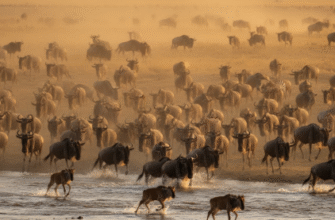
Caribou cross rivers. Lots of rivers. The Porcupine herd fords the Porcupine River itself, plus countless smaller waterways.
Historically, they’d time these crossings for when rivers were still partially frozen or at their lowest flow—usually late May or early June. But warming temperatures mean rivers now flood earlier and stay swollen longer, forcing herds to either wait (burning precious fat reserves while standing around) or attempt dangerous crossings where calves drown in swift currents. In 2017, researchers documented at least 300 drowned calves in a single crossing event. I guess it makes sense that caribou can’t just reroute on the fly—their migration paths are culturally transmitted, meaning young animals learn the route by following older ones, and there’s no GPS update for “river now impassable for three extra weeks.” Wait—maybe there’s some adaptation happening? Honestly, not fast enough. Genetic studies suggest caribou adapt to environmental shifts over centuries, not decades.
Then there’s the industrial stuff. Oil and gas infrastructure has carved up Alaska’s North Slope and Canada’s Mackenzie Delta with roads, drill pads, and pipelines. Caribou avoid these structures, sometimes by miles, which forces them into longer detours that cost energy.
The Bathurst herd in Canada’s Northwest Territories has crashed from 472,000 animals in 1986 to fewer than 8,000 today—a 98% decline that researchers attribute partly to diamond mining development fragmenting their range. Energy companies argue their footprint is small, and technically they’re right: a single drill pad might occupy just a few acres. But caribou don’t experience landscapes as discrete points; they experience them as continuous habitat, and a drill pad plus its access road plus the vehicle traffic plus the human activity creates an avoidance zone that can extend 2-3 miles in radius. Multiply that across dozens of sites and you’ve effectively sliced migration corridors into disconnected patches.
Predators Who Didn’t Get the Memo About Staying Put
Wolves follow caribou. So do bears. Always have.
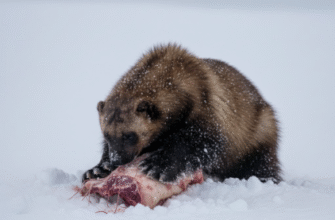
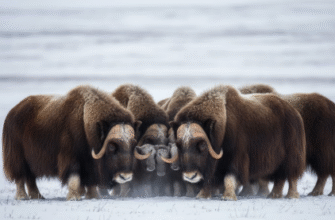
But climate change is letting these predators expand their ranges northward and hang around longer in areas that used to be too harsh for year-round residence. Grizzly bears, which historically stayed south of the treeline, are now showing up regularly on Arctic tundra during caribou calving season, which is basically an all-you-can-eat buffet of defenseless newborns. One study in Alaska found grizzly predation accounted for up to 40% of calf mortality in some years, compared to maybe 10-15% a generation ago. Caribou evolved antipredator strategies based on predator density and behavior patterns that held stable for millennia, and now those calculations are off. They’ll bunch together defensively when wolves appear, but they don’t seem to recognize grizzlies as the same level of threat even though bears can be just as lethal to calves.
And here’s something weird: insect harassment is getting worse. Warmer summers mean longer, more intense hatches of mosquitoes and bot flies, which doesn’t sound life-threatening until you realize caribou fleeing insect swarms can lose up to 50% of their potential weight gain during summer because they’re running instead of eating. They’ll head for snow patches or windy ridges to escape the bugs, but those refugia are shrinking as summers warm.
Some herds are adapting their routes slightly—the Teshekpuk herd in Alaska has shifted its calving grounds about 40 miles east over the past 30 years, apparently tracking cooler conditions. But adaptation has limits. Caribou need specific conditions: windswept areas with low snow accumulation for winter grazing (they dig through snow to reach lichens), predator-sparse zones for calving, and corridors connecting these habitats that aren’t blocked by infrastructure or unfrozen rivers. When too many of those requirements become unavailable simultaneously, herds don’t just find new routes—they decline. The Western Arctic herd peaked at 490,000 animals in 2003 and has since dropped to around 188,000, a decline that definately correlates with the compounding stresses I’ve described here.
I don’t know if caribou will figure this out. Maybe some herds will. Others won’t.