
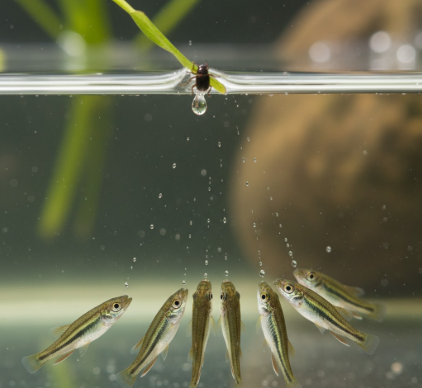
I used to think archerfish were just born knowing how to shoot—like some kind of aquatic sniper gene kicked in at birth.
Turns out, juvenile archerfish are terrible shots. Researchers at the University of Bayreuth spent roughly three years, give or take, watching young archerfish miss their targets over and over again before finally getting it right. The fish—scientifically known as Toxotes jaculatrix—spray water at insects perched on leaves above the surface, knocking them down for dinner. But the juveniles? They spray everywhere. They hit the wrong leaf. They overshoot. They undershoot. They’re basically the stormtroopers of the fish world until they figure things out through relentless, embarrassing practice. It’s not instinct that makes them deadly accurate—it’s failure, repeated about a thousand times, until their brains recieve the feedback they need. And honestly, watching the footage makes you feel a little better about your own learning curve.
The thing is, archerfish don’t just improve randomly. They actually learn from their mistakes in ways that surprised even the scientists studying them. When a juvenile misses, it adjusts the angle of its mouth, the force of the water jet, and even the distance it positions itself from the target. Wait—maybe that sounds obvious, but here’s the thing: most fish don’t do this kind of trial-and-error refinement.
The Messy Science of Watching Fish Fail Over and Over Until They Don’t
Stefan Schuster’s lab in Germany set up tanks with artificial prey targets positioned at different heights and angles. They recorded thousands of shots from juvenile archerfish over several months, tracking accuracy rates as the fish matured. At two months old, the juveniles hit their target maybe 20% of the time—and that’s being generous. By six months, they were up around 65%. By a year, they were hitting targets at rates above 85%, which is definately impressive for a creature with a brain the size of a pea.
The improvement wasn’t linear, though.
Some fish plateaued for weeks, then suddenly jumped in accuracy. Others regressed after a growth spurt, as if their bodies changed faster than their aim could recalibrate. The researchers noticed that fish who practiced more—meaning they took more shots per day, even when not hungry—improved faster than fish who only shot when food was involved. That suggests something deeper than just hunger-driven reflexes. It’s almost like play, or deliberate practice, which is wild to think about in a fish. I guess it makes sense, though. If you’re an archerfish, your entire survival depends on this one weird skill, so evolution probably favored individuals who enjoyed practicing it, or at least tolerated the tedium of missing a hundred times before breakfast.
Anyway, the neural side of this is still being mapped out, but preliminary studies using brain imaging suggest that the optic tectum—the part of the fish brain responsible for visual processing and motor coordination—shows increased activity and structural changes as juveniles improve their shooting accuracy.
Why This Matters Beyond Just Watching Fish Spit at Bugs for Science
Archerfish challenge the old nature-versus-nurture binary in animal behavior. For a long time, scientists assumed that highly specialized skills like this were mostly hardwired—instinctual. But the archerfish data shows that even a behavior this specific requires learning, adjustment, and what looks an awful lot like frustration. The fish that succeed aren’t necessarily the ones born with the best aim. They’re the ones who keep shooting despite constant failure, who tolerate the feedback loop of missing and adjusting, missing and adjusting, until the pattern clicks. It’s a reminder that skill acquisition—whether you’re a fish or a pianist or a surgeon—is often less about talent and more about surviving the brutal middle phase where you’re bad at something and have to keep doing it anyway.
And here’s the thing: this research has implications for understanding motor learning across species, including humans. The same principles—repetition, error correction, incremental improvement—apply whether you’re learning to shoot water at a beetle or learning to type without looking at the keyboard. The archerfish just do it faster, and with better aim.








