I used to think seahorses were just weird fish that didn’t do much.
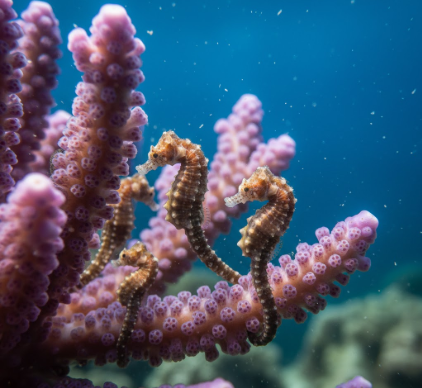
Turns out, pygmy seahorses—those thumbnail-sized creatures clinging to gorgonian corals in the Indo-Pacific—are dealing with thermal challenges that would make most marine biologists scratch their heads. These animals, rarely exceeding 2 centimeters in length, live in environments where water temperature can fluctuate by several degrees Celsius within hours, especially in shallow reef zones where light penetration is intense and tidal exchanges create unpredictable thermal gradients. Unlike their larger cousins, pygmy seahorses can’t exactly swim away to cooler waters when things heat up. They’re effectively glued to their coral hosts, which means they’ve had to develop some pretty remarkable physiological workarounds. And here’s the thing: we’re only just beginning to understand how they manage to survive—let alone thrive—in conditions that would stress out most ectothermic vertebrates.
The metabolic tightrope walk isn’t just about staying cool, either. Research from around 2018 or so suggested that Hippocampus bargibanti, one of the more studied pygmy species, can modulate its metabolic rate in response to thermal stress, though the exact mechanisms remain somewhat unclear. It’s not like they have sweat glands or can pant.
When Your Home Is Also Your Thermal Prison—And Your Only Hope
The gorgonian corals these seahorses inhabit are themselves sensitive to temperature changes, and there’s this weird codependency happening that scientists are still unpacking. The coral polyps provide structural refuge and camouflage, but they also create microhabitats with distinct thermal properties compared to the surrounding water column. Some researchers have documented temperature differentials of up to 1.5 degrees Celsius between the coral surface and ambient water during peak daylight hours, which doesn’t sound like much until you realize that for an animal this small, with such a high surface-area-to-volume ratio, even minor thermal shifts can dramatically affect enzymatic activity and oxygen consumption. I guess it makes sense that pygmy seahorses would evolve to tolerate these microclimatic variations, but the trade-off is that they’re essentially stuck—adaptation becomes a kind of trap when your evolutionary success is tied to a specific host organism that’s itself vulnerable to climate change.
Wait—maybe that’s too grim. There’s evidence that some populations show behavioral thermoregulation, like shifting position on the coral to exploit shaded areas or areas with better water flow. It’s subtle, but it’s there.
Honestly, the physiological data is still pretty sparse, which frustrates me more than it probably should. Most studies on seahorse thermoregulation focus on temperate or larger species kept in aquaria, where you can control variables and measure metabolic rates with precision. Pygmy seahorses, by contrast, are notoriously difficult to collect, transport, and maintain in captivity—they often refuse to feed and are highly sensitive to handling stress. So what we know comes mostly from field observations and a handful of lab studies conducted under less-than-ideal conditions. One paper I read suggested that H. denise might have a slightly broader thermal tolerance than H. bargibanti, possibly reflecting differences in their geographic ranges (the former is found across a wider latitudinal spread), but the sample sizes were small and the error bars were, frankly, uncomfortable. Another study hinted at the possibility of heat shock protein upregulation during thermal stress, which would be a pretty standard ectothermic response, but again—definately not conclusive.
The Unseen Cascade: How Temperature Messes With Everything From Digestion to Reproduction
Here’s where things get messy. Temperature doesn’t just affect metabolic rate in isolation; it cascades through every physiological system. Digestive enzymes work optimally within narrow thermal windows, so even if a pygmy seahorse manages to capture prey (usually tiny crustaceans like copepods), its ability to extract nutrients can be compromised if ambient temperature is outside the ideal range. Reproduction is even more temperature-sensitive—most seahorse species require specific thermal cues to initiate courtship and egg development, and there’s some evidence that elevated temperatures can disrupt these cues or lead to developmental abnormalities in embryos. Male pygmy seahorses, like all seahorses, carry fertilized eggs in a brood pouch, and the metabolic cost of brooding increases with temperature, which could create an energetic bottleneck during warm-water events. We’ve seen mass bleaching events in coral reefs over the past couple of decades, and while most attention goes to the corals themselves, the cryptic fauna—including pygmy seahorses—are likely experiencing parallel physiological crises that we’re not monitoring closely enough.
Adaptation, Acclimation, or Just Barely Hanging On?
There’s a tendency in science journalism to frame every evolutionary story as a triumph of adaptation, but sometimes survival is less about elegant solutions and more about scraping by with whatever works. Pygmy seahorses might be able to acclimate to gradual temperature increases over the course of weeks or months—maybe through shifts in mitochondrial density or changes in membrane lipid composition, both of which are documented in other fish species—but rapid thermal spikes, like those associated with marine heatwaves, probably exceed their acclimatory capacity. And acclimation isn’t the same as adaptation; it’s a within-lifetime adjustment, not a heritable change. If reef temperatures continue to rise at the current pace (roughly 0.1 to 0.2 degrees Celsius per decade in many tropical regions, give or take), it’s unclear whether pygmy seahorse populations can keep up, either through acclimation or through natural selection acting on thermal tolerance traits.
I’ve seen footage of pygmy seahorses clinging to bleached, dead coral branches, and it’s hard not to feel like we’re watching something slip away in real time. The science is incomplete, the data are patchy, and the future is uncomfortably uncertain.