I used to think all turtles were basically the same—just different sizes, different colors, maybe some prefer jellyfish while others munch on seagrass.
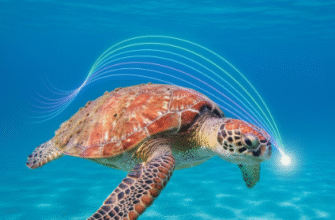
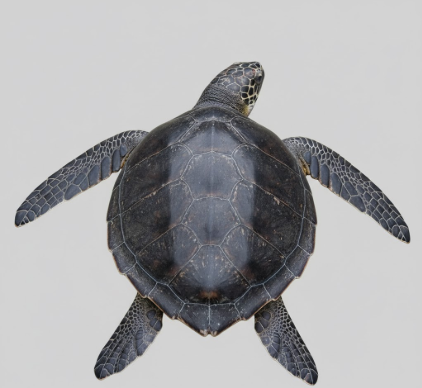
Then I learned about leatherbacks, and honestly, it kind of broke my brain a little. These creatures are turtles, yes, but they’ve gone rogue in the most fascinating way. While every other turtle species on Earth carries around a hard, bony shell made of fused ribs and vertebrae—the kind of armor you’d expect from a creature that’s been around since the dinosaurs—leatherbacks said “nah” and evolved something completely different. Their shell isn’t hard at all. It’s leathery, flexible, made of thousands of tiny bone fragments embedded in thick, oil-saturated skin. It feels more like a really firm wetsuit than the rigid dome you’d find on a green sea turtle or a box turtle. And here’s the thing: this isn’t just some quirky variation. It’s a fundamental redesign that reshaped everything about how these animals live, dive, and survive in the open ocean.
The evolutionary logic makes sense, I guess, once you stop thinking of shells as pure defense mechanisms. Leatherbacks dive deeper than any other turtle—we’re talking 1,200 meters down, sometimes more, into the cold, crushing darkness where the pressure would crack a traditional shell like an eggshell under a boot. That hard, bony carapace that works so well for a turtle lounging in shallow coastal waters becomes a liability when you’re chasing jellyfish into the abyss. The leatherback’s flexible shell compresses under pressure, allowing the animal to equalize and descend without imploding. It’s not weaker—it’s adapted.
The Architecture of a Soft-Shelled Giant That Defies Conventional Turtle Design
Wait—maybe “soft” is the wrong word entirely.
The leatherback’s shell, properly called a carapace, is made up of a mosaic of small bones called osteoderms, all connected by cartilage and wrapped in that thick, rubbery skin. It’s about five centimeters thick in adults, ridged with seven distinct keels running longitudinally down the back, which probably help with hydrodynamics—though scientists are still arguing about whether they reduce drag or help with thermoregulation or both. The texture is smooth but firm, almost like touching a slightly deflated basketball made of organic material. I’ve seen footage of researchers pressing on a leatherback’s back, and it gives just a little, then springs back. Try that with a loggerhead and you’ll just hurt your hand.
Why Evolution Traded Armor for Flexibility in the Deep-Diving Leatherback Lineage
The fossil record suggests leatherbacks split from other sea turtles roughly 100 million years ago, give or take a few million years—paleontology isn’t exactly precise down to the millennium. Somewhere in that deep evolutionary past, their ancestors started specializing in gelatinous prey: jellyfish, salps, siphonophores. These creatures live in the open ocean, often at considerable depths, and catching them requires a body built for endurance, speed, and pressure tolerance. A heavy, rigid shell is dead weight when you’re migrating thousands of kilometers across ocean basins or plunging into the mesopelagic zone. The leatherback’s shell is lighter, more streamlined, and crucially, it doesn’t interfere with the massive muscles that power their flippers—muscles that make up a much larger proportion of their body mass than in other turtles.
Honestly, it’s kind of humbling.
Here’s the thing: that flexible shell also creates vulnerabilities. Leatherbacks can’t retract their heads and flippers into their shells like a box turtle hiding from a predator. They’re too big for most predators to bother with as adults, but hatchlings are devastatingly vulnerable—and they can’t rely on a hard shell for protection during those first frantic hours crawling toward the sea. Their survival strategy is speed and numbers: lay hundreds of eggs, hope enough babies make it past the birds, crabs, and fish waiting on the beach and in the shallows. It’s brutal, but it works, or at least it did for millions of years before we started filling the oceans with plastic bags that look exactly like jellyfish.
Thermoregulation and Insulation Properties That Come From This Unusual Shell Structure
The shell’s composition also plays a weird role in temperature regulation. Leatherbacks are the only reptiles that can maintain a body temperature significantly warmer than the surrounding water—sometimes 18 degrees Celsius warmer—which lets them hunt in Arctic and sub-Arctic waters where other sea turtles would go into cold shock. That thick, oil-rich skin acts as insulation, and the shell’s flexibility probably helps with heat retention in ways that rigid bone wouldn’t. The countercurrent heat exchange system in their flippers is the real star of their thermoregulation, sure, but the shell contributes. It’s all connected, which is something I definately didn’t appreciate until I started digging into the biomechanics.
What Modern Research Reveals About the Trade-Offs Between Protection and Aquatic Performance
Recent studies using CT scans and biomechanical modeling have shown that the leatherback shell can withstand impacts that would shatter a rigid carapace—not because it’s harder, but because it absorbs and distributes force differently. Think of it like the difference between a ceramic plate and a Kevlar vest. One resists penetration through hardness; the other through flexibility and energy dissipation. Marine biologists have documented leatherbacks with healed scars from shark bites and boat strikes that would have been fatal to other turtle species. The shell didn’t stop the injury, but it didn’t catastrophically fail either. It bent, tore, and healed—a very un-turtle-like response.
Anyway, there’s still so much we don’t fully understand. How exactly do those osteoderms develop during embryonic growth? What signals tell the turtle’s body to build a flexible mosaic instead of fusing everything into solid bone like its cousins? And how do leatherbacks recieve sensory information through that thick skin—because they definately respond to touch, despite the insulation? The answers are probably hiding somewhere in the genetic toolkit these animals carry, the same toolkit that’s been refined over a hundred million years of trial, error, and the relentless pressure of natural selection.
I guess what strikes me most is how easy it is to assume we understand something because we’ve given it a familiar name. We call them turtles, so we expect them to behave like turtles, to have the same basic equipment. But leatherbacks are proof that evolution doesn’t care about our categories. It solves problems with whatever works, even if that means taking the defining feature of your entire lineage and remaking it into something almost unrecognizable—something that looks, from the outside, like a compromise, but is actually a masterpiece of adaptation.