
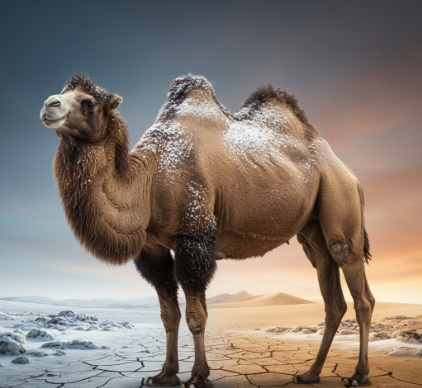
The Two-Hump Wonder That Refuses to Die in the Gobi’s Hellscape
I used to think camels were just desert animals, you know, the kind that plod along in sandy places looking vaguely annoyed.
Turns out the Bactrian camel—the two-humped one that lives across Central Asia’s most punishing landscapes—can handle temperature swings that would absolutely wreck most mammals. We’re talking minus 40 degrees Celsius in winter, then pushing past 40 degrees in summer. That’s an 80-degree range, roughly speaking, and these animals just… exist in it. They don’t migrate to Florida for winter or hole up in air-conditioned caves. The Gobi Desert, where many of them live, is this bizarre place where you can get frostbite and heatstroke in the same week, and Bactrian camels have been dealing with this for something like 500,000 years, give or take. Their bodies had to figure out solutions that frankly seem impossible when you first hear about them.
Here’s the thing: those humps aren’t water tanks. I know, I know—everyone thinks that, and I definately did too. The humps are fat storage, which sounds boring until you realize what that fat actually does. When food is scarce, the camel metabolizes that fat, and the chemical breakdown produces water as a byproduct. So it’s indirect water storage, kind of, but more importantly it’s this mobile energy reserve that doesn’t interfere with heat regulation the way a thick layer of body fat would.
Wait—maybe the more impressive part is the wool situation.
Bactrian camels grow this shaggy, dense coat in winter that can be up to 25 centimeters long on parts of their body. Then they shed it in these massive clumps come spring, and underneath is this much thinner layer for summer. I’ve seen photos of them mid-shed and they look genuinely absurd, like they’re falling apart. But that seasonal coat swap is critical—the winter wool traps air and creates insulation against cold winds and subzero temps, while the summer coat is light enough to prevent overheating. The coat also reflects solar radiation, which matters when you’re standing in direct sun with no shade for miles.
Their blood cells are oval-shaped instead of round, which I guess makes them more flexible when the camel is dehydrated and the blood thickens. Honestly, that’s the kind of detail that sounds minor until you realize it means they can lose up to 25-30% of their body weight in water and still function. Most mammals would be dead or very close to it at that level of dehydration.
Then there’s the nasal passages. Bactrian camels have these turbinates—scroll-like bones inside the nose—that are incredibly efficient at reclaiming moisture from exhaled air. When they breathe out in cold weather, the moisture condenses in the nasal passages instead of being lost to the environment, and that water gets reabsorbed. In hot weather, the same structures help cool incoming air before it hits the lungs, which reduces the amount of water lost through panting. It’s this elegant little recycling system that most people never think about because, well, who pays attention to camel noses? But the architecture there is doing serious work. The turbinates also warm frigid air in winter before it reaches delicate lung tissue, preventing damage that would occur in other species. I suppose you could say the whole respiratory system is overengineered, except it’s not—it’s precisely engineered for a place that tries to kill you with temperature about half the year.
Anyway, there’s also the feet. Broad, padded, spreading wide to distribute weight on sand or snow. Not glamorous, but functional.








