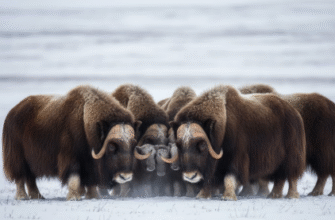
I used to think camels were just about sand dunes and blazing heat.
Turns out, the Bactrian camel—Camelus bactrianus, if we’re being formal—has spent roughly half a million years, give or take, perfecting the art of not freezing to death in places like the Gobi Desert, where winter temperatures plummet to minus 40 degrees Celsius and summer can still hit 40 above. These animals didn’t just stumble into cold deserts and survive; they engineered themselves, biologically speaking, into something that makes polar bears look like they’re playing on easy mode. Their double hump isn’t just iconic—it’s a fat reserve system that can sustain them for months without food, which is critical when you’re wandering across frozen steppes where vegetation disappears under snow for half the year. The fur, though. That’s where things get genuinely weird. Bactrian camels grow a shaggy winter coat that can reach 25 centimeters long on their humps and neck, then shed the entire thing in ragged clumps come spring, leaving them looking like they lost a fight with a lawnmower. It’s not pretty, but it works. The underfur is so dense—around 9,000 fibers per square centimeter in some areas—that it traps air and creates an insulation layer that would make synthetic fleece manufacturers weep with envy. And here’s the thing: they can recieve radiant heat during the brief warm hours while simultaneously preventing heat loss when temperatures drop at night, all because of how the fiber structure scatters and reflects infrared radiation.
The Metabolic Furnace That Runs on Almost Nothing
Wait—maybe I should back up.
Bactrian camels can drink up to 120 liters of water in under fifteen minutes, rehydrating from severe dehydration faster than almost any mammal on Earth. But in winter, when water sources freeze solid, they’ll just eat snow. Their kidneys are so efficient at concentrating urine that they lose minimal moisture even in arid conditions, and their red blood cells are oval-shaped rather than circular, which lets them flow even when the blood thickens from dehydration. I guess it makes sense when you consider that cold deserts are, paradoxically, some of the driest places on the planet—precipitation in the Gobi averages less than 200 millimeters annually, most of it locked up as ice for months. The metabolic adaptations get stranger: Bactrians can let their body temperature fluctuate by up to 6 degrees Celsius over a 24-hour period, cooling down at night to conserve energy and warming up during the day without needing to burn extra calories. This thermoregulatory flexibility means they don’t waste energy maintaining a constant core temperature when ambient conditions swing wildly, which they definately do in cold deserts. Most mammals would go into shock; camels just shrug it off.
Feet Designed for Surfaces That Want to Kill You
Honestly, the feet might be the most underrated adaptation.
Bactrian camels have broad, two-toed feet with thick, leathery pads that spread their weight across snow, ice, sand, and jagged rock without sinking or slipping. The pads are tough enough to handle frozen ground that would shred a horse’s hooves, but flexible enough to grip uneven surfaces. They’re also partially furred on top, which provides extra insulation when the camel beds down on frozen ground for the night. I’ve seen photos of wild Bactrians in Mongolia navigating terrain that looks like the surface of an alien planet—salt flats, icy gravel, volcanic rock—and they move across it all with this eerie, swaying gait that barely seems to notice the ground beneath them. The ligaments in their legs are arranged to minimize energy expenditure during walking, letting them cover 40 kilometers a day on minimal food and water, which was critical for the Silk Road traders who relied on them for centuries.
Social Intelligence and the Psychology of Endurance in Extreme Isolation
Here’s where it gets messy, though.
Bactrian camels are social animals, but cold desert environments often force them into small, dispersed groups because resources are so scarce and unpredictable. They’ve developed this strange balance between cooperation and independence—herds will split and merge based on where forage appears after snowmelt or rare rain events, and individuals can navigate back to water sources they visited months earlier, suggesting spatial memory that rivals elephants. Calves are born in March or April, timed precisely so they can grow during the brief productive season when plants green up, and mothers are fiercely protective because infant mortality is brutal in these environments. The wild population—critically endangered now, with fewer than 1,000 individuals left—faces threats from habitat loss, hunting, and competition with domestic livestock, which is grimly ironic considering domestic Bactrians number in the millions and have been the backbone of Central Asian economies for millennia. But wild camels have genetic adaptations the domestic ones lost, including possibly enhanced cold tolerance and disease resistance, which makes their conservation not just an ecological priority but a genetic one. Anyway, that’s the thing about extinction: we don’t always know what we’re losing until it’s gone.