I used to think elephants were just big, gentle creatures who remembered everything—turns out, that’s only half the story.
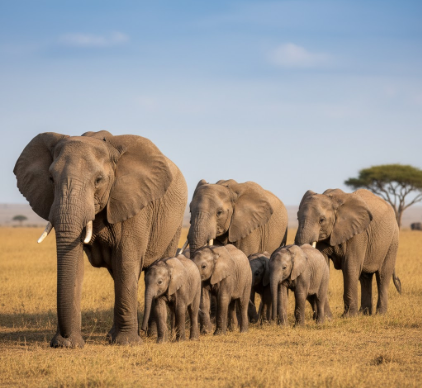
The matriarchal structure of elephant herds isn’t some feel-good nature documentary trope; it’s a survival mechanism honed over roughly 3 million years of evolution, give or take. Female elephants live in tight-knit family groups led by the oldest female, the matriarch, who carries decades of environmental knowledge in her enormous brain—which can weigh up to 5 kilograms, the largest of any land animal. She knows where water sources are during droughts, which migration routes avoid human conflict zones, and how to read the subtle body language of predators and rival herds. Her daughters, sisters, and their offspring follow her decisions almost unanimously, creating a social structure so cohesive that researchers have documented herds traveling together for 50+ years. The matriarch’s memory isn’t just impressive—it’s the difference between life and death when resources vanish and younger elephants would panic.
Here’s the thing: males don’t stick around. Bull elephants leave their birth herds around age 12-15, wandering solo or forming loose bachelor groups that lack the emotional intensity of female herds. They’ll return ocasionally to mate, but they don’t participate in child-rearing or group decisions—honestly, the contrast is stark.
When the Matriarch Dies, the Herd Faces Crisis in Ways Science Is Only Beginning to Understand
The death of a matriarch triggers what biologists call a “knowledge vacuum.” I’ve seen footage of herds circling a deceased matriarch’s body for days, touching her bones with their trunks in what looks disturbingly like grief. Without her, the herd often fragments—daughters might split off with their own offspring, or the group follows a less experienced female who makes fatal mistakes. Researchers in Amboseli National Park documented herds that lost matriarchs during droughts: their calf survival rates dropped by 30-40% compared to herds with living matriarchs. The older female’s absence meant younger mothers didn’t know which waterholes still held water, which plants were safe during food shortages, or how to navigate around poacher-heavy areas. Wait—maybe that’s overstating it slightly, but the data is pretty unambiguous.
Elephant Grandmothers Actually Improve Calf Survival More Than Mothers Do
This sounds counterintuitive, but longitudinal studies show that calves with living grandmothers (post-reproductive females who stay with herds) have significantly better survival odds than those without. Grandmothers don’t nurse, obviously, but they provide protection, teach foraging skills, and help discipline rambunctious juveniles—freeing up mothers to focus on lactation and immediate care. It’s one of the clearest examples of the “grandmother hypothesis” outside humans, and it’s fascinatingly messy because not all grandmothers are equally helpful. Some are protective; others seem kind of checked out.
The Communication System Inside Herds Relies on Infrasound Humans Can’t Even Hear
Elephant matriarchs coordinate their herds using infrasonic calls—rumbles below 20 Hz that travel up to 10 kilometers through the ground. These low-frequency vocalizations let them communicate across vast distances, warning of danger or signaling reunion after separations. Younger females learn this “language” by watching the matriarch, and researchers have identified at least 70 distinct call types, though that number probably underestimates the complexity. The vibrations travel through elephants’ sensitive foot pads, meaning they’re literally feeling conversations—honestly, it’s one of those facts that makes you reconsider what “hearing” even means.
Male Elephants Aren’t Matriarchal, But They’re Not Totally Independent Either
Bulls form what’s called a “fission-fusion” society—they come together temporarily, then split apart. Older males sometimes mentor younger ones, teaching them how to spar without serious injury and where to find food during musth (a hormonal state with skyrocketing testosterone). But there’s no equivalent to the matriarch; no single male leads or makes decisions for the group. Some researchers argue this makes male elephant society more egalitarian, but I guess it also means they lack the institutional knowledge that keeps female herds alive through environmental catastrophes.
Climate Change and Poaching Are Destroying Matriarchal Knowledge Faster Than Herds Can Adapt
Here’s where it gets depressing. Poachers target older elephants because they have the largest tusks—which means they’re killing matriarchs disproportionately. A 2020 study found that herds in poaching-heavy regions are now led by females in their 20s and 30s, not their 50s and 60s, and these younger leaders make objectively worse decisions under stress. They’re more likely to approach human settlements (increasing conflict), less able to find water during droughts, and their herds show higher cortisol levels—a physiological marker of chronic stress. Climate change compounds this by making traditional migration routes unreliable; the matriarch’s knowledge of “where to go when it’s dry” becomes useless when those waterholes have been dry for five consecutive years. The system that worked for millennia is breaking down in real time, and younger elephants are inheriting a world their elders can’t prepare them for.
Anyway, that’s the reality of elephant matriarchies—simultaneously awe-inspiring and heartbreaking.