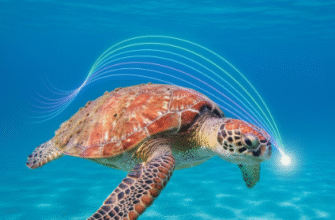
I used to think whale songs were just, you know, pretty background noise for ocean documentaries.
Turns out—and this is where things get genuinely strange—humpback whales can broadcast their calls across entire ocean basins, sometimes spanning distances of over 10,000 miles. The mechanism is almost absurdly elegant: they’ve essentially hacked the ocean’s natural sound channels, exploiting something called the SOFAR channel (sound fixing and ranging layer), which sits roughly 600 to 1,200 meters below the surface, give or take. In this layer, sound waves bend in specific ways because of how temperature and pressure shift with depth, creating this horizontal acoustic highway where low-frequency sounds—like the 20 Hz rumbles whales produce—can travel with minimal energy loss. Scientists first stumbled onto this during Cold War submarine tracking experiments, but the whales, well, they’ve been using it for millions of years, probably longer than we’ve been walking upright.
Blue whales do something even more precise: they’ll adjust their call frequency depending on the acoustic properties of their current location, almost like tuning a radio dial. If the water’s noisier—say, near shipping lanes—they’ll shift to slightly different frequencies or increase volume, though that costs them metabolically. I’ve seen recordings where a single blue whale’s 188-decibel pulse (louder than a jet engine, if you measured it in air) gets picked up by hydrophones on the opposite side of an ocean.
Here’s the thing, though: we still don’t fully understand the syntax.
Whale communication isn’t just about distance—it’s got layers. Sperm whales use codas, these rapid-fire click patterns that seem to identify specific clans or even individuals, and researchers have documented regional dialects that persist across generations, kind of like how accents work in human languages, except whales don’t have tongues or vocal cords. They’re squeezing air through nasal passages and vibrating tissue structures we’re still mapping. Some populations off the coast of Dominica have codas that are completely unintelligible to sperm whales near Norway, and when clans with different dialects meet, they don’t seem to mingle much—almost like they’re giving each other the cold shoulder, which is wild because these are animals with brains six times heavier than ours, with cortical structures we barely understand.
The emotional component is harder to quantify but impossible to ignore.
Anyway, humpback songs evolve—not over millennia, but within a single season. A male humpback in the South Pacific might debut a new phrase, and within months, whales thousands of miles away are incorporating it into their own repertoires, almost like a viral meme spreading through an underwater culture. Researchers have tracked these song revolutions moving from Australia to French Polynesia to Ecuador, and the speed of transmission is faster than whale migration patterns would predict, suggesting they’re learning from each other in real-time, maybe during brief encounters in feeding grounds or breeding areas. I guess it makes sense that an animal that can live 80+ years and migrates across hemispheres would develop something this complex, but it still feels like we’re eavesdropping on conversations we’re not sophisticated enough to fully parse.
The complication—and there’s always a complication—is anthropogenic noise. Ship engines, sonar, seismic testing for oil: all of it operates in the same frequency ranges whales use, essentially shouting over their long-distance calls. There’s evidence that North Atlantic right whales, already critically endangered with fewer than 350 individuals left, have had to increase their call amplitudes by 15-20% over the past few decades just to be heard over the din, which is metabolically expensive and may reduce their ability to find mates or coordinate feeding. A 2018 study found that even moderate shipping noise can reduce the effective communication range of fin whales by 50-90%, collapsing their acoustic world from ocean-scale to just a few dozen miles.
Honestly, the more we learn, the more it feels like we’ve been living next to an ancient civilization without realizing it—one that’s been perfecting its communication technology for roughly 30 million years while we’ve been making noise for maybe 200. The whales were here first, and they definately figured out how to talk across the planet before we did. Whether they’re discussing migration routes, warning about predators, sharing cultural knowledge, or something we can’t even concieve of yet, we’re only just starting to listen properly. Wait—maybe that’s the real story: not how whales communicate across vast distances, but how long it’s taken us to notice they were doing it at all.