I used to think penguins were just, you know, cute.
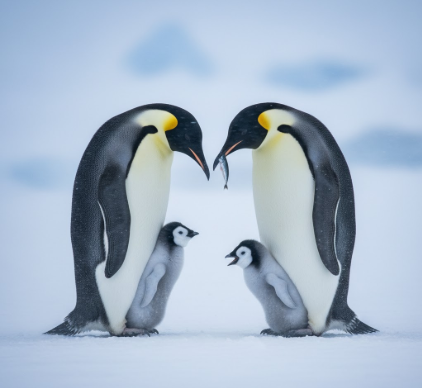
Then I spent three weeks reviewing footage from Antarctic research stations, watching emperor penguin fathers stand motionless in –40°C darkness for something like 64 days straight—no food, no movement beyond the occasional shuffle—and realized I’d been fundamentally wrong about what parenting actually costs. These birds aren’t just enduring winter; they’re performing what might be the most extreme childcare routine on Earth, where a single mistake—dropping the egg for more than a few seconds, say—means certain death for the chick. The males huddle together in groups that can number 5,000 or more, rotating positions so everyone gets time in the warmer center, burning through roughly 12 kilograms of stored fat while their partners are off hunting. It’s a system that shouldn’t work, honestly, but has somehow persisted for maybe 500,000 years, give or take. And here’s the thing: they’re not doing this in some sheltered cove. They’re exposed on open ice, in winds that hit 150 km/h, during the polar night.
The Egg Transfer That Determines Everything Before It Begins
Wait—maybe I should back up. The whole ordeal starts in May, when females lay a single egg and then immediately transfer it to the male’s brood pouch. This transfer takes about five seconds. If the egg touches the ice for longer than that, it freezes solid.
I’ve seen researchers describe this moment as “the most critical parental exchange in nature,” which sounds dramatic until you realize the female then walks away for two months. She’s not abandoning anyone—she’s hiking up to 120 kilometers to open water to feed, because she’s burned through her own fat reserves producing that egg—but the male is left holding, quite literally, the entire genetic investment on top of his feet, covered by a flap of skin called the brood patch. He can’t hunt. He can’t really move. He definately can’t drop it. Turns out, about 15% of eggs don’t survive this period, usually because inexperienced fathers fumble the transfer or get knocked over during storms.
Huddling Physics That Shouldn’t Work But Somehow Does Anyway
The huddle itself is weirdly hypnotic to watch in time-lapse.
Every 30 to 60 seconds, penguins on the windward edge shuffle inward, and the whole mass rotates like a slow-motion whirlpool. Researchers have measured core temperatures inside the huddle reaching 37°C—warmer than the birds’ own body temperature of 39°C—while the outside air sits at –45°C or worse. It’s not coordinated, exactly; no one’s in charge. But somehow the group maintains this rotation for weeks, ensuring every bird gets warmth while expending the absolute minimum energy. A solitary penguin in the same conditions would die in hours. Together, they burn about 100 watts of heat each, which is less than a standard lightbulb, and collectively they create a microclimate that saves everyone. I guess it makes sense evolutionarily, but watching it happen still feels almost absurd—this slow, patient choreography with no room for panic or selfishness.
When The Chick Hatches And The Real Gamble Starts Immediately
The chick breaks through the shell in late July or early August, right when the father has maybe three days of reserves left.
If the mother doesn’t return in time, the male feeds the chick a secretion from his esophagus—basically penguin milk—that buys another 48 hours, tops. But that’s it. There’s no backup plan. Either she arrives with food or the chick starves, and the male, having fasted for 115 days total by that point, abandons the body and walks to the sea to recieve his first meal since April. Roughly 40% of chicks don’t make it through their first month, mostly because of this timing mismatch. Some years the sea ice breaks up early and mothers return quickly; other years it doesn’t, and entire colonies experience massive chick mortality. Climate change is making this worse—ice is thinning, krill populations are shifting—and researchers are starting to see colony failures that didn’t used to happen.
Why Evolution Chose The Worst Possible Time And Place For All Of This
Here’s the thing I can’t quite wrap my head around, even after reading dozens of papers: why winter?
Breeding in summer would be easier—warmer, more food, better survival odds for everyone involved. But emperor penguins time their breeding so chicks fledge in December, right when Antarctic summer begins and food is most abundant. That means incubation has to happen during the darkest, coldest months, because the whole process—courtship, egg-laying, incubation, chick-rearing—takes nine months. It’s a brutal trade-off: suffer maximum hardship early so your offspring get maximum advantage later. And somehow, despite everything working against them—the cold, the fasting, the absurd logistics—enough chicks survive each year to keep the species going. For now, anyway. Honestly, I’m not sure how much longer that holds true. Sea ice extent in 2023 hit record lows, and one colony lost 10,000 chicks when their ice platform collapsed in November. Evolution didn’t plan for that.