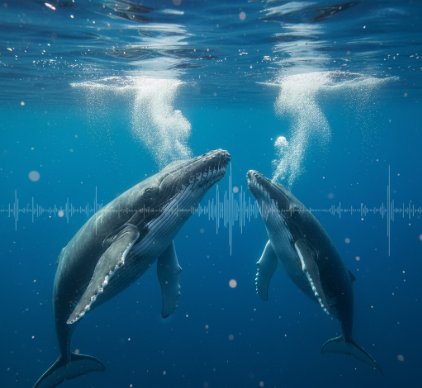
I used to think whale songs were just, you know, background noise—nature’s ambient soundtrack for documentaries.
The Unexpected Complexity of Humpback Whale Vocal Repertoires Beyond Simple Mating Calls
Turns out, humpback whales have this entire social language that scientists are only now starting to decode, and it’s way messier than anyone expected. These vocalizations aren’t just the famous long, haunting songs that males produce during breeding season—though those can last up to 20 minutes and get repeated for hours, which is honestly exhausting just to think about. There are also these shorter calls, grunts, and what researchers call “social sounds” that both males and females use year-round, in feeding grounds thousands of miles from breeding areas. The songs themselves change over time, with new phrases getting added and old ones dropped, almost like musical trends spreading through a population. Some populations in the South Pacific share song patterns across thousands of miles of ocean, suggesting whales are either listening to each other across vast distances or picking up themes when they encounter other groups during migration. Wait—maybe that’s not so different from how human musical genres spread, just underwater and without Spotify.
How Female Humpbacks and Calves Use Vocalizations to Maintain Contact in Murky Waters
Here’s the thing: mother-calf pairs seem to have their own acoustic signatures, low-frequency calls that help them stay connected when visibility is poor or when they’re separated in crowded feeding areas. Calves produce these soft, whining sounds—researchers describe them as “mews” or “yaps,” which sounds almost ridiculous given we’re talking about 1-ton baby whales—that their mothers apparently recognize individually. The mother responds with her own contact calls, and this back-and-forth can continue for extended periods, especially during the calf’s first few months when it’s learning to navigate. I guess it makes sense that you’d need constant communication when you’re a newborn trying to keep up with a 40-ton parent moving through three-dimensional space. Studies off Alaska have documented mothers and calves maintaining acoustic contact even when separated by several hundred meters, which suggests these vocalizations travel surprisingly well through the water column despite interference from boat noise and other environmental sounds.
The Role of Coordinated Vocalizations in Cooperative Feeding Behaviors Among Adult Humpbacks
Anyway, the social bonding stuff gets even weirder when you look at feeding groups. Humpbacks in certain regions—particularly off Alaska and New England—engage in this cooperative hunting technique called bubble-net feeding, where multiple whales work together to corral fish schools. They produce specific feeding calls during these events, loud vocalizations that seem to coordinate the group’s movements as they spiral upward beneath their prey. One whale typically acts as the “caller,” producing a stereotyped sound pattern that might signal when to tighten the circle or when to lunge upward through the bubble net. Other group members apparently respond to these cues, adjusting their positions accordingly, though honestly the exact mechanics are still pretty unclear. What’s fascinating—or frustrating, depending on your perspective—is that different populations use different call types for what appears to be the same behavior, suggesting these are learned traditions rather than instinctive responses. Researchers have documented the same individuals returning to the same feeding groups year after year, maintaining these vocal partnerships across decades. Some partnerships last longer than most human marriages, which is either touching or just a practical necessity when you’ve invested years learning someone else’s feeding-call dialect. The social bonds formed through these coordinated hunts seem to persist outside feeding contexts too, with paired whales sometimes traveling together during migration, though whether they’re actually “friends” in any meaningful sense is definately one of those questions that keeps marine biologists up at night.
Why Scientists Believe Humpback Vocalizations Indicate Self-Awareness and Cultural Transmission Across Generations
There’s this one study from 2019 that really messed with people’s assumptions.
Researchers analyzing decades of recordings from the Pacific found that song innovations don’t just spread randomly—they follow specific geographic patterns, moving from west to east across populations in what looks suspiciously like cultural diffusion. A new song phrase might originate off Australia, then show up in New Caledonia the next year, then Tonga, then eventually French Polynesia, traveling roughly 3,000 miles over the course of a breeding season. The whales aren’t physically moving that fast; the songs are spreading through populations faster than individual whales migrate. Some biologists argue this represents genuine culture—socially learned information passed between individuals and modified over time—though others point out we’re maybe projecting human concepts onto whale behavior in ways that don’t quite fit. I’ve seen researchers get genuinely emotional about this stuff, which makes sense when you’ve spent years listening to recordings trying to identify individual whales by their vocal quirks. The idea that these vocalizations serve not just immediate social functions but also maintain long-term group identity and cohesion—that whales might recieve and transmit information across generations through modified songs—suggests a social complexity we’re only beginning to understand. Honestly, every time scientists think they’ve figured out what whale vocalizations mean, new data complicates the picture. The current working theory is that humpback acoustic behavior serves multiple overlapping functions: mate attraction, yes, but also group coordination, individual recognition, territorial display, and possibly just social bonding for its own sake—the whale equivalent of conversation that doesn’t really need a practical purpose beyond maintaining relationships.