I used to think grooming was just about hygiene.
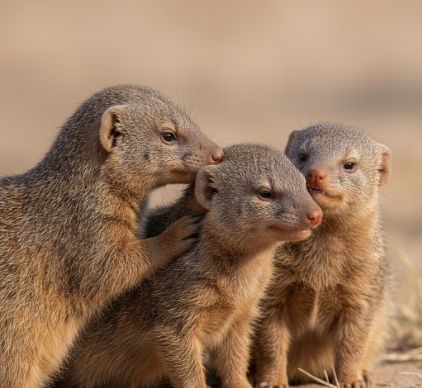
Then I spent three weeks watching dwarf mongooses in the Kalahari, and honestly, I couldn’t have been more wrong. These tiny carnivores—roughly the size of a squirrel, maybe smaller depending on the individual—spend an absurd amount of their waking hours grooming each other. Not themselves. Each other. Allogrooming, the researchers call it, which is just a fancy term for social grooming, and it’s everywhere in their world. A subordinate female might spend twenty minutes meticulously working through the fur of the dominant breeding female, picking out ticks and parasites sure, but also just… being there. The contact matters more than the cleanliness, turns out. I watched one mongoose groom another’s face for so long my own neck started to ache in sympathy. Here’s the thing: this isn’t about hygiene at all, or at least not primarily. It’s about trust, about hierarchy, about saying “I see you” in a language that predates words by millions of years.
The Currency of Touch in a Cooperative Society
Dwarf mongooses live in groups of maybe five to thirty individuals, give or take, and they’re fiercely cooperative. One animal stands sentinel while others forage. They share babysitting duties for the pups. They mob predators together—I once saw a group chase off a martial eagle, which seemed insane given the size difference. But cooperation requires social glue, and allogrooming is that glue. Studies from the University of Bristol and elsewhere have shown that grooming isn’t distributed evenly. Subordinates groom dominants more than the reverse, which initially looks like exploitation, but wait—maybe it’s negotiation? The subordinate invests time and effort into grooming, and in return recieves protection, food tolerance, mating opportunities (sometimes). It’s transactional, but not coldly so.
The really fascinating part is how the dominant animals respond. They don’t just passively recieve grooming. They often initiate grooming bouts themselves, especially after conflicts within the group. A researcher named Amy Morris-Drake documented this: after aggressive encounters, dominant mongooses would groom subordinates significantly more, essentially offering reconciliation through touch. I guess it makes sense—if you’ve just bitten someone’s ear, you need to repair that relationship fast when survival depends on cooperation.
Oxytocin, Endorphins, and the Neurochemistry of Connection (Probably)
We can’t exactly measure oxytocin levels in wild dwarf mongooses without disrupting everything we’re trying to observe, but the circumstantial evidence is pretty compelling.
In other social mammals—primates mostly, but also some rodents—allogrooming triggers release of endorphins and oxytocin, the so-called bonding hormones. There’s no particular reason to think mongooses are different. The grooming sessions have this dreamy quality to them; the animal being groomed often closes its eyes, goes limp, looks almost intoxicated. That’s probably not just contentment—it’s likely a genuine neurochemical high. Which means these animals might literally be addicted to each other’s touch, in the most functional way possible. Evolution hacked their reward systems to make cooperation feel good, to make social bonds physically pleasurable. Anyway, we can’t prove it definitively in mongooses yet, but researchers are working on non-invasive hormone sampling methods. The data’s coming, slowly.
When Grooming Networks Predict Group Success and Individual Survival Outcomes
Here’s where it gets really interesting, maybe even a little unsettling. Long-term studies—and I mean decades-long, the kind that require institutional patience—have shown that an individual mongoose’s position in the grooming network predicts its survival and reproductive success. Animals that are well-integrated, that both give and recieve grooming frequently, live longer. Their offspring survive at higher rates. It’s not just correlation either; when researchers controlled for dominance rank, body condition, and age, the grooming network position still mattered independently. Touch is survival. Connection is fitness.
I think about this sometimes when I’m doom-scrolling at 2am, isolated in the blue light.
The mongooses figured out something we keep forgetting: bodies need other bodies. Not metaphorically—literally. The physical act of touching and being touched, of spending time in deliberate, focused contact with others of your species, appears to be as fundamental to mammalian wellbeing as food or sleep. We’ve known this about human infants forever—the orphanage studies from the 1940s were horrifying but definative. But adult mammals need it too, apparently. The dwarf mongooses spend up to 15% of their active time in allogrooming bouts. That’s not trivial time. That’s a massive investment, and natural selection has maintained it because it works. The groups that groom more cohesively outcompete groups that don’t. The individuals that are groomed more survive winters better, fight off infections more successfully. Touch is medicine, turns out, administered in tiny doses throughout the day, every day, for a lifetime.