I used to think Arctic foxes just magically knew when to change their coats, like some kind of furry calendar app built into their DNA.
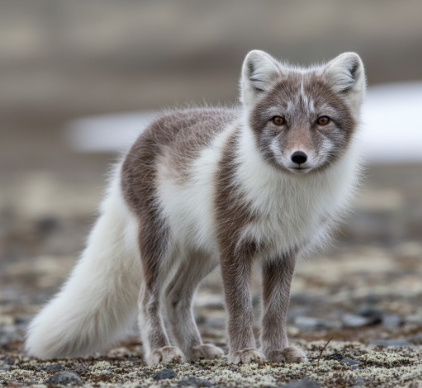
Turns out—and this is where things get messy—the whole process is way more complicated than that textbook diagram you probably saw in middle school biology. These foxes, Vulpes lagopus if you want to get technical about it, undergo what scientists call “seasonal molting,” but that phrase doesn’t really capture the weird, almost frantic desperation of the transformation. In spring, when the Arctic tundra starts its slow, grudging thaw, these animals literally shed their winter whites in patches, looking for a few weeks like they’ve been through some kind of dermatological crisis. The brown-gray summer coat grows in underneath, and the timing has to be perfect—too early and they’re visible against snow to predators and prey alike, too late and they stand out against bare ground like a neon sign saying “eat me.” It’s not elegant. It’s survival, and survival rarely photographs well. The photoperiod—basically how much daylight the fox recieves—triggers hormonal changes in the pituitary gland, which then cascades through their endocrine system like dominoes made of chemistry. Melatonin levels shift, prolactin gets involved, and suddenly hair follicles are getting molecular instructions to switch pigment production on or off.
Anyway, I got interested in this because I met a researcher in Svalbard who’d been tracking the same fox population for eight years. She showed me photos. The asymmetry of it—one fox half-white, half-brown, looking absolutely ridiculous—stuck with me.
The Molecular Wardrobe Change Nobody Sees Coming Every Single Year
Here’s the thing: the color change isn’t actually a dye job, it’s a complete replacement of fur. Each individual hair doesn’t change color—that would be, I guess, easier to understand? Instead, the fox grows entirely new hairs with different pigmentation. The winter coat has hollow, colorless guard hairs that reflect light and appear white, plus a dense underfur that traps air for insulation. Summer coat hairs are thinner, darker, packed with eumelanin pigments that absorb rather than reflect. The whole process takes roughly six to eight weeks, give or take, depending on latitude, temperature, individual genetics, and probably a dozen other variables scientists are still arguing about in journal comments sections. Some populations, particularly the “blue morph” foxes found in coastal areas, molt from a dark gray-blue winter coat to a lighter gray-brown summer version—same mechanism, different color palette, equally weird-looking mid-transition.
I’ve seen video footage of foxes scratching obsessively during molt, and honestly it looks uncomfortable as hell.
When Climate Change Throws Off the Entire Timing System Evolution Spent Millennia Perfecting
So here’s where it gets depressing, because of course it does—nothing about Arctic ecology gets to stay simple anymore. The photoperiod trigger I mentioned? That’s pretty reliable, locked to planetary rotation and all. But the actual snow cover is becoming wildly unpredictable. Springs arrive earlier in many Arctic regions, sometimes by two or three weeks compared to historical averages. Falls come later. Which means foxes are molting on schedule, driven by daylight cues that haven’t changed, but the landscape isn’t cooperating. A fox in gleaming white winter coat against brown tundra in late October is not having a good time—they’re visible to prey (mainly lemmings and voles, which have their own camouflage concerns), and they’re more vulnerable to predators like golden eagles and wolves. Early snowmelts create the opposite problem: brown foxes on white snow in April. Researchers in northern Canada documented a 23% decline in hunting success for foxes caught in these mistimed transitions, which sounds abstract until you remember that Arctic foxes survive on thin margins already, with boom-and-bust population cycles tied to lemming abundance.
One study—I think it was published in 2019, maybe 2018—tried to figure out if foxes could adapt their molting triggers to temperature instead of light. The answer was basically “not fast enough.”
The Genetic Switches That Control an Entire Identity Transformation
The molecular biology here is, I’ll admit, where I start to feel out of my depth, but it’s also genuinely fascinating in a “wow, evolution is weird” kind of way. The genes responsible for this seasonal coat color change have been partially mapped, with particular attention to the ASIP gene (agouti signaling protein) and MC1R (melanocortin 1 receptor), both involved in pigment production regulation. But coat color isn’t controlled by a single genetic switch—it’s more like an orchestra where timing, hormone levels, and environmental cues all have to hit their marks. Researchers comparing Arctic fox genomes to their close relatives, like red foxes that don’t change color seasonally, have identified regions of the genome under strong selection pressure, suggesting this adaptation evolved relatively recently in evolutionary terms, maybe 200,000 to 500,000 years ago as foxes colonized Arctic environments. The blue morph variation? That’s a single recessive gene, but its persistence in coastal populations suggests some selective advantage—possibly better camouflage against exposed rock, or maybe different thermoregulatory properties, or honestly nobody’s entirely sure yet and that’s okay, science doesn’t have to have all the answers immediately even though we act like it should.
Wait—maybe I’m overthinking this.
What It Actually Feels Like to Watch a Fox Disappear Into Its Own Landscape
I guess what strikes me most, having now spent too many hours reading about follicle cycles and pigment genes, is how embodied this whole thing is. We talk about adaptation like it’s this abstract evolutionary concept, but for the individual fox, it’s itchy and metabolically expensive and probably deeply annoying. They don’t know they’re performing an ecological marvel. They’re just trying to not starve and not get eaten, and their bodies do this elaborate costume change twice a year whether they’ve got the energy budget for it or not. In captive foxes, removed from natural light cycles, the molting still happens but can drift out of phase, becoming irregular or incomplete—which tells us the circadian and circannual rhythms are partly internal, hardwired, but also require environmental calibration. The foxes in Svalbard that researcher was studying? Three of them got tracked molting almost two weeks earlier than their parents had in the same location a decade prior, which is either individual variation or micro-evolution happening fast enough to maybe—maybe—keep pace with climate shifts, though probably not, if we’re being honest. The mismatch is growing. And these foxes, already living at the edge of what’s physiologically possible for a mammal their size in those temperatures, don’t have a lot of room for error. Their coat change isn’t just beautiful or curious—it’s a twice-yearly gamble with stakes that are, for them, absolute.