I used to think mongooses were solitary creatures, like cats with better PR.
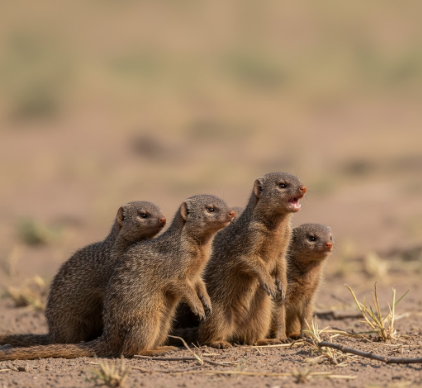
Turns out, dwarf mongooses—these rust-colored bundles of nervous energy weighing maybe 300 grams, give or take—live in groups of 10 to 20 individuals and they’ve got a defense system that would make a military strategist weep with envy. They’re cooperative breeders, which means most of the group sacrifices reproduction to help raise the alpha pair’s pups, and yeah, they also band together to defend their territory against rival groups. The thing is, this isn’t just instinct playing out like some pre-programmed algorithm. Researchers working in southern Africa have documented dwarf mongooses engaging in what looks suspiciously like coordinated tactical maneuvers, complete with sentinel behavior, vocal communication that varies by threat level, and even—wait—maybe this is the wildest part—role specialization based on age and sex. Older males tend to take the riskiest positions during border patrols, while younger animals hang back, watching, learning, occasionally screwing up in ways that would get them killed if the group didn’t compensate.
Here’s the thing: territory defense isn’t cheap. It costs energy, time, and sometimes lives. So why do subordinate dwarf mongooses, who aren’t even breeding, throw themselves into these skirmishes? The dominant explanation involves indirect fitness benefits—helping your relatives survive increases the odds your shared genes make it to the next generation. But honestly, the data gets messier when you look closer.
The Exhausting Mathematics of Who Fights and Why
Some subordinates are more related to the alpha pair than others, and you’d expect the closely related ones to fight harder. Except they don’t always. A 2019 study tracking marked individuals in Uganda’s Queen Elizabeth National Park found that participation in territorial conflicts correlated more strongly with an individual’s body condition and recent foraging success than with relatedness coefficients. Translation: well-fed mongooses are braver, regardless of whether they’re defending cousins or distant relatives.
Which makes sense, I guess.
But it also suggests that cooperation here isn’t purely altruistic—it’s a calculated gamble where personal state matters as much as kinship. The mongooses aren’t reading Hamilton’s rule before deciding whether to charge at intruders; they’re running some kind of internal cost-benefit analysis that weighs hunger against the risk of getting bitten. And the group benefits because enough individuals, at any given moment, happen to be in good enough shape to fight. It’s cooperation, sure, but it’s also opportunistic as hell.
Sentinels Who Definately Aren’t Martyrs
Sentinel behavior—where one mongoose climbs to a high point and watches for predators while others forage—looks selfless until you realize sentinels are usually the most recently fed individuals. They’ve already eaten. Standing guard is less risky when your stomach is full and you’re not distracted by the desperate need to find food. The sentinel gets to rest, digest, and earn social credit while the group forages below, periodically glancing up to check if the sentinel is still paying attention or has dozed off (which happens more than you’d think).
Vocal Dialects and the Problem of Eavesdropping Rivals
Dwarf mongooses use a complex vocal repertoire—contact calls, alarm calls, aggression calls—and researchers have identified what might be group-specific dialects. Different groups sound slightly different, even when making the same type of call. This could help mongooses distinguish neighbors from strangers, which matters because territorial conflicts with strangers are way more violent than disputes with familiar rivals. The problem? If rivals can learn each other’s dialects, they can potentially eavesdrop, gathering intel on group size and composition before launching raids. There’s some evidence this actually happens, though proving it requires the kind of playback experiments that are, frankly, a nightmare to conduct in dense scrubland where mongooses vanish into termite mounds the second they sense something’s off.
What Cooperation Actually Looks Like When Nobody’s Watching
I’ve watched footage of dwarf mongoose territorial encounters, and they’re chaotic—lots of posturing, high-pitched screaming, sudden retreats, and occasional vicious bites. It’s not the choreographed solidarity you see in nature documentaries. Some individuals hang back. Some flee entirely. A few go berserk and charge straight at enemies twice their size. The group wins not because every member is equally committed, but because enough members, for their own varied reasons, decide fighting is preferable to the alternative.
Cooperation, at least in dwarf mongooses, is less a noble pact and more a temporary alignment of selfish interests that happens to produce collective defense. And maybe that’s true for most cooperation, if we’re being honest.