I used to think albatrosses were just big seagulls with better PR.
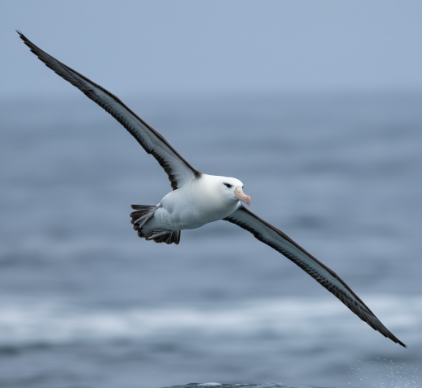
Turns out, these birds are basically the fighter jets of the avian world, except they don’t need fuel—just wind gradients and a willingness to fly thousands of miles without landing. The wandering albatross, with its 11-foot wingspan (the longest of any living bird), can cover roughly 500 miles in a single day using a technique called dynamic soaring. It’s this wild dance between wind layers over the ocean, where the bird essentially harvests energy from the atmosphere itself. Scientists have been studying this for decades, but here’s the thing: we’re still figuring out exactly how they pull it off without exhausting themselves. Some researchers estimate these birds can circumnavigate Antarctica three times in a single year, which is absurd when you consider they’re doing it on what amounts to an energetic shoestring budget.
The basic physics sounds simple until you actually try to explain it. Albatrosses fly low over the water where wind speed is slower due to friction with the ocean surface, then they wheel upward into faster-moving air at higher altitudes. Wait—maybe I should back up. The wind speed increases with altitude in what’s called the wind gradient or boundary layer, typically extending up to about 50 feet above the waves. When the bird climbs into this faster airstream, it gains groundspeed and kinetic energy without flapping. Then it arcs over and dives back down, converting that energy into another low pass over the water.
The Messy Reality of Extracting Energy From Thin Air, Literally
Here’s where it gets weird: the albatross isn’t actually getting energy from nowhere—that would violate thermodynamics, and physics gets cranky about that. Instead, it’s exploiting the shear between different wind speeds, essentially using the atmosphere’s own turbulence against itself. Imagine riding a skateboard between two conveyor belts moving at different speeds; you’d get pushed around by the difference. Albatrosses do this in three dimensions, constantly adjusting their bank angle and trajectory to maintian the sweet spot where they’re gaining more energy than they’re losing to drag. I’ve seen footage of these birds in 40-knot winds, and they barely move their wings—just these tiny adjustments to their wingtips and tail feathers. One study from 2004 tracked albatrosses flying in winds as low as 6 miles per hour, which shouldn’t theoretically provide enough gradient for dynamic soaring, but the birds managed anyway. We’re still not entirely sure how.
Why Flapping Is For Amateurs and Other Albatross Secrets
The energetic payoff is staggering. A 2016 analysis found that dynamic soaring reduces the energy cost of flight by something like 90% compared to continuous flapping flight. That’s why albatrosses can forage across entire ocean basins—they’re not really working that hard once they’re airborne. The catch is that this technique only works over open water with consistent wind, which is why you’ll never see an albatross trying this in a forest or, I guess, anywhere with trees. Young albatrosses spend years learning the technique, and honestly, a lot of them crash spectacularly during the learning process. Researchers have documented juvenile birds basically face-planting into waves because they misjudged their loop timing.
The Uncomfortable Truth About What Happens When the Wind Dies
Climate change is messing with wind patterns, and that’s a problem.
Albatrosses are adapted to the roaring forties and furious fifties—those latitudes in the Southern Ocean where wind is relentless. But as atmospheric circulation shifts, some regions are seeing calmer conditions, which is like removing the road from under a race car. A 2020 study suggested that changing wind patterns could force albatrosses to expend more energy or alter their foraging routes entirely, potentially impacting breeding success. These birds already have one of the lowest reproductive rates of any bird—they typically raise one chick every two years—so any additional energetic stress could push populations toward decline. Some species, like the Amsterdam albatross, number fewer than 100 individuals, and they definately don’t have margin for error.
What Engineers Are Stealing From Birds Who Never Asked to Be Role Models
Meanwhile, roboticists and aerospace engineers are trying to copy dynamic soaring for drones. Several prototypes have successfully used the technique to stay aloft for extended periods without battery power, which could revolutionize ocean monitoring and weather data collection. There’s something darkly funny about humans spending millions to replicate what albatrosses figured out through evolution: how to fly almost indefinitely on borrowed wind. One experimental glider in 2018 managed to stay airborne for 14 hours using dynamic soaring, which the researchers celebrated as a breakthrough. An albatross would call that a slow Tuesday. The birds are still better at it, though—our drones can’t handle the chaotic, gusty conditions that albatrosses navigate effortlessly, and they certainly can’t do it while simultaneously hunting for squid.