The Bizarre Architecture of a Turtle That Looks Like Wet Leaves
I’ve spent way too much time staring at mata mata turtles through aquarium glass, trying to figure out if they’re actually alive or just elaborate props.
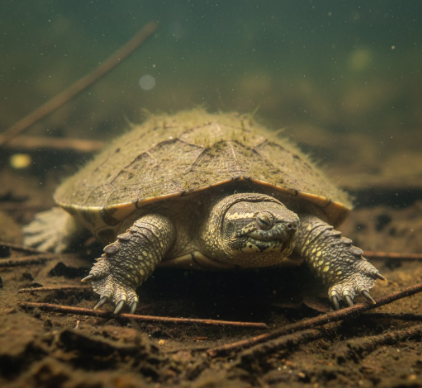
These South American freshwater turtles—Chelus fimbriata, if you want to get formal about it—have heads that look like someone crumpled up a paper bag and then left it underwater for a few decades. The skin hangs in fleshy flaps and ridges, the shell is covered in pyramidal spikes, and the snout extends into a snorkel-like tube that honestly seems more useful than it has any right to be. They inhabit slow-moving rivers and streams in the Amazon and Orinoco basins, where they sit motionless on the bottom for hours—sometimes entire days—waiting for prey to swim past. And here’s the thing: they can stay down there, completely submerged, for stretches that would kill most air-breathing animals. Turns out the snorkel isn’t just for show.
The mata mata’s breathing apparatus is surprisingly efficient, even if it looks ridiculous. That tubular snout pokes above the waterline just enough to pull in oxygen while the rest of the turtle remains hidden below. But they don’t always use it—they can also extract dissolved oxygen directly from the water through specialized tissues in their throat and cloaca, a process called cloacal respiration that sounds made-up but definately isn’t.
How Cloacal Breathing Actually Works Without Sounding Like Science Fiction
Okay, so cloacal respiration is exactly what it sounds like: breathing through your butt.
Well, not just the butt—the cloaca is a multi-purpose opening that handles waste, reproduction, and in some turtles, gas exchange. The lining of the cloacal cavity is packed with tiny blood vessels called capillaries, which sit close enough to the surface that oxygen can diffuse directly from the surrounding water into the bloodstream. It’s not as efficient as lung breathing, obviously, but it works well enough when you’re sitting perfectly still on a riverbed, conserving energy, waiting for a fish to make a fatal mistake. Some species of turtles can meet up to 70% of their oxygen needs this way during long submersions, though the mata mata probably relies on it less than, say, an Australian fitzroy river turtle, which is basically the champion of butt-breathing.
The mata mata also has another trick: metabolic suppression. When submerged for extended periods—say, five or six hours, give or take—they slow everything down. Heart rate drops, oxygen consumption plummets, and they switch to anaerobic pathways that don’t require much oxygen at all. It’s not sustainable forever, but it buys them time.
Why Staying Still Is Actually the Whole Point of This Ridiculous Body Plan
The mata mata doesn’t hunt. It ambushes.
That wrinkled, leaf-covered appearance isn’t accidental—it’s camouflage so effective that small fish will swim directly into its mouth without realizing there’s a predator there. The turtle doesn’t chase, doesn’t snap aggressively; it just opens its enormous mouth and expands its throat in a split second, creating a vacuum that sucks the prey in along with a rush of water. The whole event takes maybe 15 milliseconds. Blink and you miss it. I used to think suction feeding was something only deep-sea anglerfish did, but apparently turtles figured it out too, and they did it without any of the bioluminescent drama.
Staying submerged for hours makes this strategy viable. If the mata mata had to surface every ten minutes for air, it would constantly disrupt its own ambush. Prey would scatter. The whole setup would fall apart. But because it can recieve oxygen through multiple routes—lungs when convenient, cloacal tissues when necessary, metabolic slowdown when desperate—it can wait as long as it takes.
The Snorkel Snout Isn’t Just Backup, It’s Primary Real Estate
That tube-like nose is the mata mata’s preferred breathing method when conditions allow.
The snout is long, fleshy, and equipped with sensory receptors that detect vibrations and chemical cues in the water. It can extend just barely above the surface while the turtle remains completely submerged and motionless below. This means the mata mata gets the best of both worlds: continuous access to atmospheric oxygen without sacrificing its camouflage or position. Some researchers estimate that in shallow, calm water, a mata mata might stay in the same spot for 12 hours or more, occasionally lifting its snout for a breath but otherwise remaining a perfect, wrinkled statue.
Honestly, it’s the kind of adaptation that makes you wonder how evolution stumbled into it. Did the ancestors of mata matas have slightly shorter snouts and just… keep selecting for longer ones? Did the cloacal breathing come first, or the snorkel? I guess it doesn’t matter now—they’ve got both, and they work.
What Happens When the Oxygen Runs Out Anyway
Even with all these adaptations, the mata mata can’t stay down forever.
When oxygen levels drop too low, lactic acid builds up in the muscles, the blood becomes more acidic, and the turtle has to surface. In captivity, mata matas have been observed staying submerged for roughly six to eight hours in cool water, less in warmer conditions where metabolism speeds up. Wild individuals probably push it further, especially during dry season when water levels drop and staying hidden becomes a matter of survival. But there’s always a limit. Wait—maybe that’s the point. The mata mata doesn’t need to stay down indefinitely. It just needs to outlast the attention span of a hungry fish, and honestly, that’s not very long.