I used to think blue whales just sort of wandered around the ocean, but turns out their migrations are absurdly precise—like, thousands of miles precise.
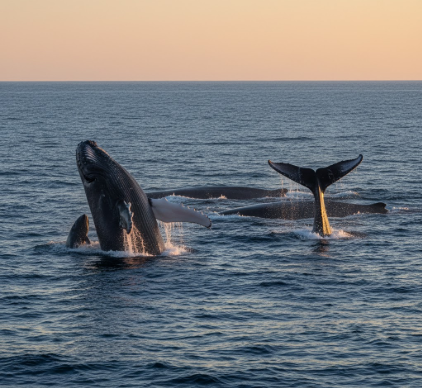
These animals, the largest to ever exist on Earth, follow routes between cold-water feeding grounds near the poles and warmer breeding areas closer to the equator. The North Pacific population, for instance, travels from rich feeding zones off California and the Gulf of Alaska down to waters near Costa Rica and the Baja Peninsula—roughly 6,000 miles one way, give or take. Scientists have tracked individuals making this journey in about two to three months, which sounds slow until you remember they’re moving a body the size of a commercial jet through water. The timing isn’t random either: they leave feeding areas in late fall, usually around November, when krill populations crash for winter, and they arrive at breeding grounds just as females are ready to give birth or mate. It’s this weird choreography between biological need and ocean seasonality that’s been fine-tuned over, what, maybe a million years of evolution?
The Navigation Problem That Still Confuses Marine Biologists
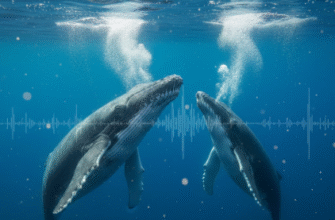
Here’s the thing—we still don’t entirely know how they do it. Researchers have proposed magnetic field detection, similar to sea turtles, because blue whales definately seem to follow consistent routes even when ocean conditions vary year to year. Some evidence suggests they might use underwater topography, following seamounts and continental shelf edges like highways. But honestly, the most fascinating theory involves acoustic landmarks: these whales produce incredibly low-frequency calls, sometimes below 20 Hz, that can travel hundreds of miles underwater. They might literally be listening to the ocean’s geography—the way sound bounces off underwater mountains or gets funneled through channels.
What complicates everything is that different populations have different routes. The Antarctic blue whales migrate north toward the Indian Ocean and waters off Indonesia, while the pygmy blue whale subspecies in the Southern Hemisphere has its own patterns entirely. A team tagging whales near Sri Lanka in 2019 found individuals traveling to feeding areas near the Maldives—wait—maybe not the Maldives exactly, but somewhere in that region, the data was somewhat ambiguous because satellite tags sometimes fail in deep dives.
The breeding part is still mysterious.
Unlike humpbacks, which perform elaborate courtship in specific tropical bays, blue whales seem to mate opportunistically along migration routes or in loosely defined warm-water zones. We’ve never actually observed blue whale mating, which is almost embarrassing for marine science given how much we know about other species. Pregnant females arrive at these warmer areas to give birth, probably because newborn calves lack the blubber insulation needed for polar waters—a calf is born at around 23 feet long and drinks roughly 100 gallons of milk daily, gaining about 200 pounds every 24 hours for the first year. That metabolic demand requires the mother to be in relatively calm, warm water where the calf isn’t losing energy to thermoregulation.
Why Some Whales Are Breaking the Pattern and What That Might Mean
Recent tracking studies have shown something unsettling: some blue whales aren’t migrating at all anymore, or they’re cutting trips short. A 2021 study off Southern California documented individuals staying in feeding areas year-round, which is bizarre because historical records show consistent migrations. The hypothesis? Ocean warming is keeping krill populations active longer into winter, removing the environmental pressure to leave. But that creates a reproductive problem—if whales stop reaching breeding grounds, do they skip mating years? Do they breed in colder water and risk calf survival?
I guess what unsettles me most is how fragile this whole system seems now that we’re actually paying attention. These routes have persisted through ice ages and ocean circulation shifts, but shipping lanes now cut directly through major migration corridors—the Channel Islands region alone sees thousands of container ships annually, and ship strikes are a leading cause of blue whale deaths. Anyway, there’s also underwater noise pollution from naval sonar and seismic surveys, which might interfere with acoustic navigation. We’re essentially blindfolding an animal that evolved to navigate by sound.
The longest recorded migration for any blue whale was tracked at roughly 8,200 miles from the eastern Pacific to the western Pacific near the Philippines, documented by a research team in 2015 using satellite telemetry. That individual took about four months to complete the journey, averaging around 70 miles per day but with huge variation—some days barely moving, others covering 150+ miles. The inconsistency suggests they’re foraging opportunistically during migration, not just traveling in a straight line, which makes sense given their energy needs but also makes route prediction incredibly difficult for conservation planning.