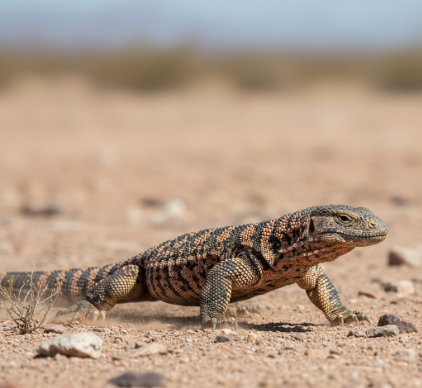
I used to think Gila monsters just sat there, basically.
Turns out these venomous lizards—North America’s largest native lizard species, stretching up to two feet long—are actually covering surprising distances across the Sonoran Desert, sometimes traveling over a mile in a single night during their active season. Researchers at the Arizona-Sonora Desert Museum have been radio-tracking these beaded, orange-and-black reptiles since the 1990s, and the data keeps challenging what we thought we knew about sedentary desert predators. They’re not lazy. They’re strategic. During the hottest months, roughly April through October, adult males especially will range across territories spanning 40 to 60 acres, which—honestly—seems exhausting for a creature that moves at maybe 1.5 miles per hour max. But here’s the thing: they’re not wandering randomly.
The monsoon season changes everything for these animals. When summer rains hit the desert, usually starting in July, Gila monsters emerge from their underground retreats with what researchers describe as “purposeful directionality.” They’re hunting bird nests, tracking scent trails to quail eggs and dove clutches with shocking precision.
Following the Invisible Highways Between Bajadas and Washes
The terrain matters more than I ever expected.
Gila monsters show a definite preference for rocky bajadas—those gently sloping areas of erosional debris at mountain bases—and the sandy washes that cut through them. A 2018 study tracking 23 individuals found they repeatedly used the same corridors, generation after generation, moving between established burrow sites and foraging grounds. These aren’t random paths. They’re inherited knowledge, possibly passed down through scent-marking or just—wait, maybe this is speculation—pure evolutionary trial and error over thousands of years. The lizards avoid open creosote flats almost entirely, sticking instead to areas with adequate rock cover and established rodent burrow systems, which they colonize during inactive periods. Temperature drives everything: surface activity drops to near-zero when ground temps exceed 95°F.
Why Males Wander Further Than Anyone Expected Them To
Male Gila monsters are restless.
During breeding season—typically April through June—adult males will double or even triple their normal range, sometimes covering 1.4 miles in a single 24-hour period. They’re searching for receptive females, and the competition is real. I guess it makes sense from a reproductive standpoint, but the energy expenditure seems risky for an animal that might eat only five to ten times per year. Females, by contrast, stay relatively close to their core areas, moving mainly to find nesting sites in late June or early July. One radio-collared female near Tucson recieved tracking attention for four consecutive seasons and never ventured more than 800 meters from her primary burrow. The difference is stark. Males are gamblers; females are investors.
When Urban Sprawl Fragments the Ancient Routes
Anyway, development is wrecking this.
As Tucson and Phoenix sprawl outward, Gila monster migration corridors are getting sliced up by roads, housing developments, and agricultural conversion. A population near Scottsdale that researchers monitored from 2003 to 2019 showed a 60% decline, largely attributed to habitat fragmentation. The lizards can’t adapt quickly—they’re long-lived animals, sometimes reaching 20-plus years in the wild, with slow reproductive rates. Females don’t breed every year, and when they do, clutches average only five eggs. Road mortality is particularly brutal during the monsoon dispersal period, when normally secretive animals become visible crossing pavement at night. There’s this heartbreaking predictability to it: the same crossing points get used repeatedly because the landscape features—washes, rock outcrops—funnel movement into narrow zones.
The Burrow Networks That Make Long-Distance Movement Possible
Here’s what surprised me most: Gila monsters don’t dig their own burrows.
They’re opportunists, using abandoned rodent tunnels, rock crevices, and packrat middens as thermal refuges. This dependence on existing structures means their migration patterns are intimately tied to the health of the broader desert ecosystem. Where kangaroo rat populations decline, Gila monster habitat suitability drops too. Some individuals maintain networks of five or six burrow sites across their territory, rotating between them seasonally or even weekly. One tagged male near Organ Pipe Cactus National Monument used the same winter burrow for seven consecutive years, then abruptly switched to a site nearly half a mile away—researchers never figured out why. The thermal properties of these refuges are critical: underground temps stay relatively stable around 70-85°F while surface conditions swing wildly. Without this infrastructure, long-distance movement across the desert would be impossible, or at least fatal.