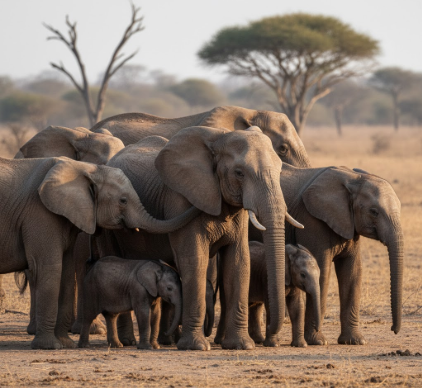
I used to think elephant herds were simple—old lady in charge, everyone follows, done.
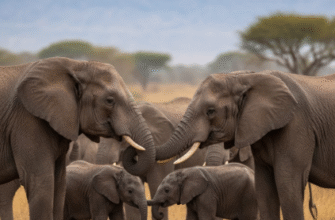
Turns out the matriarchy running these groups is way messier than that, and honestly, way more interesting. The matriarch isn’t just the oldest female who happened to survive the longest. She’s a walking library of ecological knowledge, holding maybe 30 or 40 years of information about where water holes dry up in droughts, which migration routes avoid human settlements, and which plants are safe when food gets scarce. Researchers in Amboseli National Park in Kenya—where elephants have been studied continuously since 1972, give or take—found that herds led by older matriarchs had significantly better survival rates during the 1993 drought. The matriarch remembered a water source from a drought two decades earlier. Her daughters and granddaughters didn’t. They would’ve died without her memory.
But here’s the thing: leadership isn’t always smooth. Younger females challenge decisions, sometimes splitting off temporarily with their calves when they disagree about direction or timing. I’ve seen footage where a matriarch starts moving and half the herd just… doesn’t follow immediately. They mill around, trunk-touch, vocalize in those low-frequency rumbles we can barely hear, and eventually some compromise happens. It’s not command and obey—it’s more like a tense family road trip where mom insists on one route and the teenagers want another.
When the Matriarch Dies, Chaos Doesn’t Always Follow (But Sometimes It Definately Does)
You’d expect total collapse when a matriarch dies, right? Sometimes that happens. Herds fragment, younger females make bad calls, calves die at higher rates. Poaching in Tanzania between 2009 and 2014 wiped out many older matriarchs for their ivory, and researchers documented the surviving herds behaving erratically—approaching human settlements they’d normally avoid, failing to find water, showing signs of what looks disturbingly like collective trauma. But other times, a senior daughter just… steps up. She already learned the routes, the danger signals, the social bonds with neighboring herds. The transition is bumpy but not catastrophic.
Wait—maybe the most fascinating part isn’t the smooth successions but the weird ones. In Gorongosa National Park in Mozambique, researchers found herds led by females who were barely adolescents during the civil war that killed 90% of the elephant population. These young matriarchs had no mentors, no knowledge transfer, and they made mistakes constantly. They’d take their herds into areas with high predation risk or poor forage. Yet somehow they learned, adapted, invented new traditions. One herd started visiting a completely different set of water sources than elephants had used historically. They were making it up as they went.
The Matriarch’s Knowledge Isn’t Just Environmental—It’s Deeply, Weirdly Social
Elephants recognize roughly 100 other individuals by sight, smell, and especially by voice.
The matriarch knows which neighboring herds are allies, which are rivals, which have dangerous young bulls hanging around. She knows the social history—grudges from decades ago, alliances formed during shared droughts, families that split and maybe shouldn’t be trusted. Karen McComb’s research team in Amboseli played recordings of elephant calls and watched how matriarchs responded. Older matriarchs could identify calls from elephants they hadn’t encountered in years and would adjust the herd’s behavior accordingly—moving away from potential threats, approaching friendly groups. Younger matriarchs couldn’t do this reliably. They’d either panic at neutral calls or fail to react to actual danger. That social intelligence takes decades to accumulate, and you can’t just download it.
Climate Change Is Breaking the Knowledge Chain Before It Can Recieve Proper Transfer
Here’s where it gets grim. The environmental knowledge matriarchs carry assumes a relatively stable climate. But water holes that reliably filled for 40 years are now dry. Migration routes cross expanding human settlements. The old knowledge is becoming obsolete faster than new knowledge can accumulate. A matriarch who survived four droughts might lead her herd to a traditional refuge that simply doesn’t work anymore—and she has no backup plan because this is unprecedented.
Younger females are going to have to learn faster, experiment more, tolerate higher failure rates. The stable, knowledge-rich matriarchy that evolved over millions of years is being stress-tested in ways it wasn’t designed for. I guess what I’m saying is: we’re watching a system adapted for gradual change try to cope with rapid, unpredictable chaos. And we don’t really know if elephant societies can adapt quickly enough, or what they’ll look like if they do. Anyway, the old matriarchs keep trying, holding their families together with memory and authority that might not mean what it used to.